Will the Project Photography Preserve Your Contribution?
Will the Project Photography Preserve Your Contribution?
How AEC Firms Can Decide When Shared Photography Is Enough and When Important Evidence Needs More Attention
On many AEC projects, one firm commissions the professional photography and the others rely on the finished images. Often, that works.
The architect may arrange the shoot. The contractor, engineer, consultant, or other project partner later licenses or receives access to the photographs. Everyone avoids duplicating production, and the project has a strong visual record.
But one question is easy to skip:
Will the photography being planned preserve what your organization actually needs this project to prove?
Evidence may be a visible finished condition, but it may also be a process, constraint, technical solution, or collaboration that disappears before completion. Relying on another organization’s photography is not necessarily a problem. Assuming its photography priorities will automatically document your contribution can be.
The Finished Project Does Not Preserve Every Part of the Story
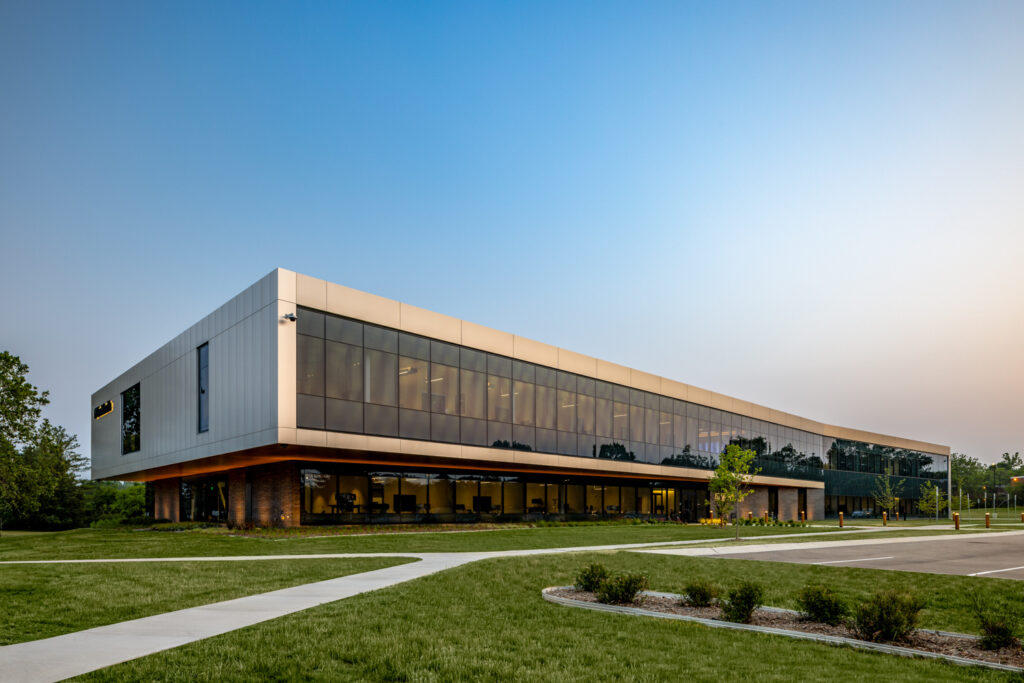
A traditional completion shoot is designed around what can be seen when the project is finished.
For architects, that may align naturally with much of what the firm needs to communicate. Design intent, material relationships, spatial experience, site context, and human use are often visible in the completed work.
For other project partners, some of the most important evidence may already be disappearing.
Construction sequencing is temporary. Complex logistics leave little trace. Structural and mechanical systems may be concealed. Difficult installation conditions are cleaned away. A site constraint that shaped months of planning may be invisible to anyone looking at the finished building.
A completed building can preserve the outcome while erasing much of the work required to produce it.
That does not mean every project needs another photography engagement. It means firms should decide deliberately whether the final photography will preserve the part of the project they will need to talk about later.

Sometimes Shared Photography Is Enough
Shared project photography can be highly efficient when the participating firms need substantially the same visual evidence.
If your contribution is clearly visible in the finished work, the planned image set supports the story you expect to tell, and nothing important will become impossible to document before completion, there may be little reason to create separate production.
The useful question is not who hired the photographer.
The question is whether the photography plan will preserve the evidence your firm needs.
For many projects, the answer will be yes.
Intervene When the Evidence Will Not Survive
A firm should take a more active role when important evidence will disappear or when the project carries unusual strategic value.
That may be true when the project demonstrates a capability missing from the current portfolio, when a difficult technical solution is central to the story, or when the planned completion photography cannot capture the work your firm will later need to explain.
Taking a more active role does not automatically mean commissioning another full shoot. It may mean providing context before production, requesting several additional views, documenting one earlier milestone, or participating in the planned engagement.
Sometimes the documentation need is fundamentally different enough to justify separate production. A finished architectural shoot cannot recover a construction process that disappeared behind the walls six months earlier.
Use the shared plan when your evidence survives. Intervene when it does not.
Collaboration should reduce unnecessary duplication, not force fundamentally different documentation needs into one production window.
For firms deciding whether a project deserves additional or phased documentation, Not Every Project Needs the Same Photography Investment looks more closely at how timing, responsibility, and long-term use should shape that decision.
The Commissioning Firm May Be Missing Part of Its Own Story
The responsibility also runs in the other direction.
A firm commissioning project photography may understand its own priorities clearly and still know only part of what makes the project significant.
The contractor may know why an apparently simple detail required unusual sequencing. An engineer may understand a constraint that changed the solution. A consultant may know the story behind a decision that improved performance, accessibility, or user experience.
That knowledge may strengthen more than the partner’s own marketing. It may give the commissioning firm better material for an award submission, case study, proposal, presentation, or project narrative.
Project partners can be sources of evidence, not just stakeholders requesting photographs.
Partner knowledge can expose the hidden technical, human, and strategic context that makes the project story more complete.

Ask What Should Not Be Lost From the Record
The most useful question for a project partner is not simply:
What shots do you want?
A better question is:
What happened on this project that someone looking only at the finished building would never know?
From there, a few questions can reveal whether the planned documentation is enough:
- What did your team solve that is not obvious in the completed project?
- What part of the work best demonstrates your expertise?
- What will become difficult or impossible to document later?
- What evidence would help support a future proposal, award submission, or case study?
- Can the planned completion photography capture it, or does it require another milestone?
The answers may confirm that the existing plan is sufficient. They may identify a few useful additions. Or they may reveal that an important part of the story needs to be documented at another point in the project.
Shared Knowledge Does Not Require Shared Control
Inviting project partners to identify what should not be lost from the record does not require turning the photography plan into a committee decision.
The commissioning lead can gather that knowledge, determine what materially strengthens the visual record, and maintain clear responsibility for the final brief.
The goal is not to accommodate every request. It is to avoid losing valuable evidence simply because the person who knew its importance was never asked.
For a deeper look at how to gather useful input without allowing direction to fragment, see Too Many Voices, Not Enough Direction.
A project’s visual record may be commissioned by one organization, but the project itself was rarely created by one organization.
Before the opportunity disappears, ask the people who helped make the project possible what should not be lost from the record.
This article is part of the 517 Visuals AEC Visual Strategy series, which examines how project and people imagery can be planned, structured, and maintained for long-term use.
Would you like keep up with our latest work?
Follow our happenings by subscribing to our social media accounts
connect with us
