TechSmith Headquarters
TechSmith Headquarters
Phasing Workplace Photography Across Occupied Interiors, Completed Landscape, and Aerial Context
Architectural and aerial photography for the MSU Research Foundation at TechSmith’s headquarters in East Lansing, Michigan
MSU Research Foundation commissioned 517 Visuals to photograph TechSmith’s headquarters through a phased architectural and aerial photography engagement.
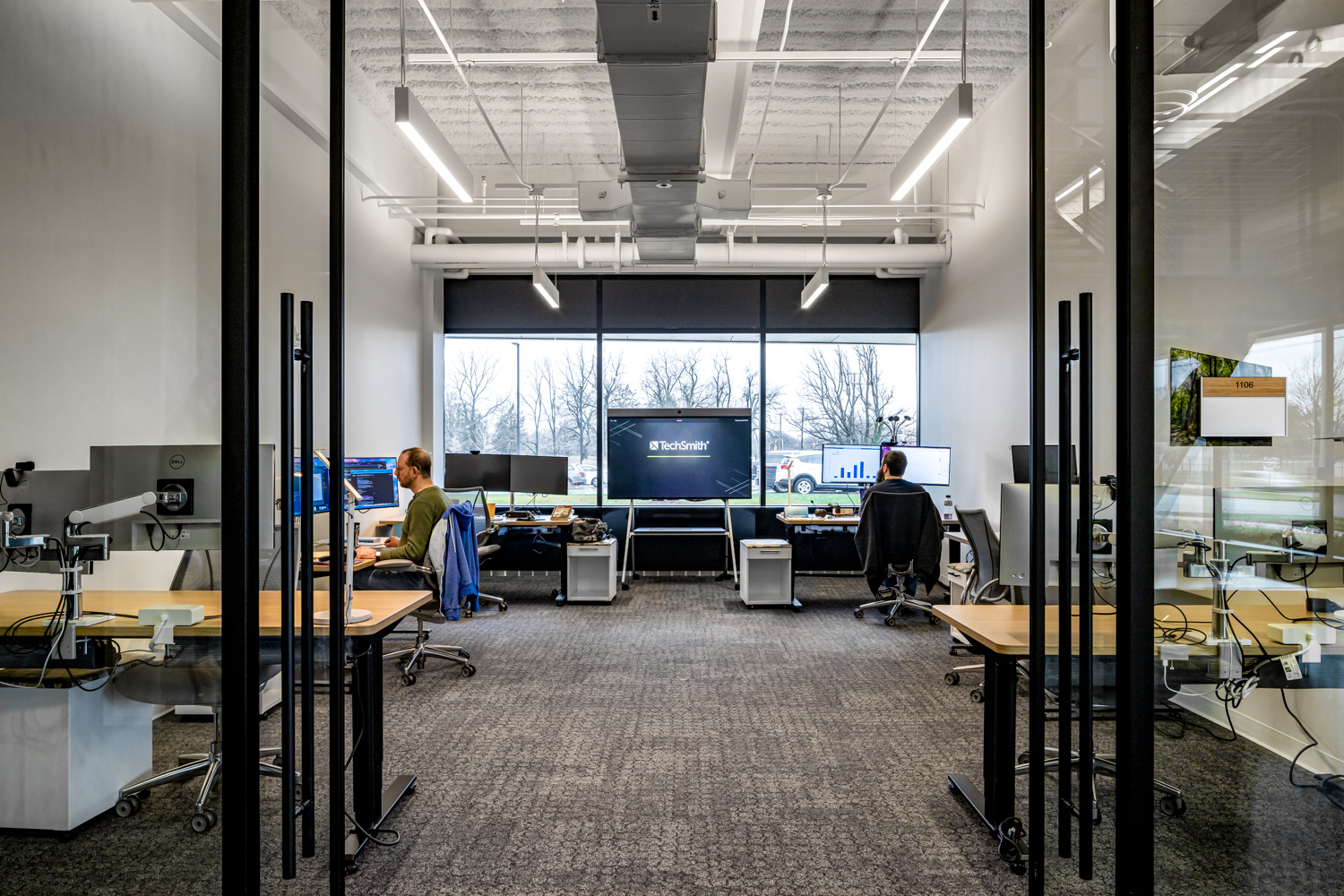
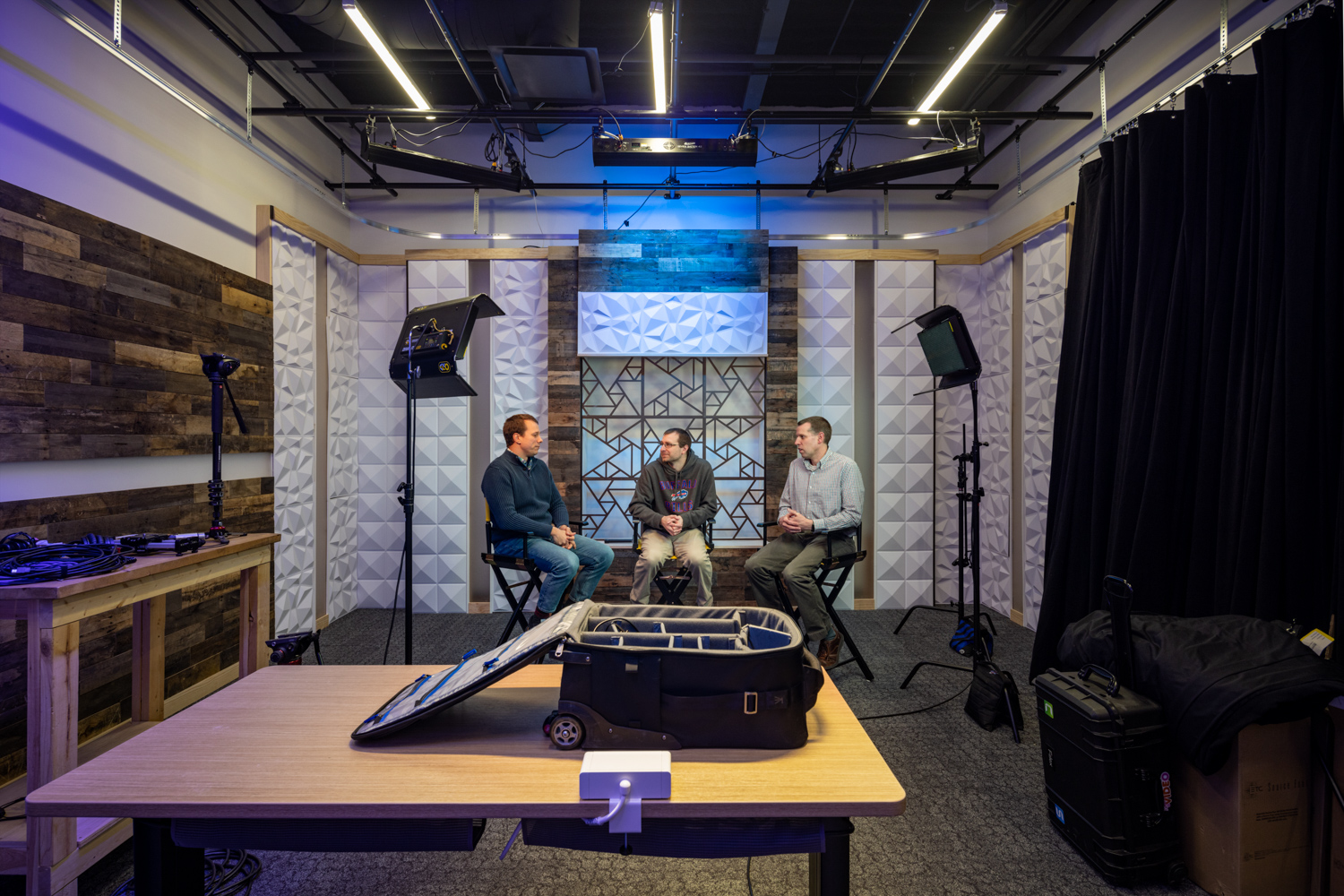
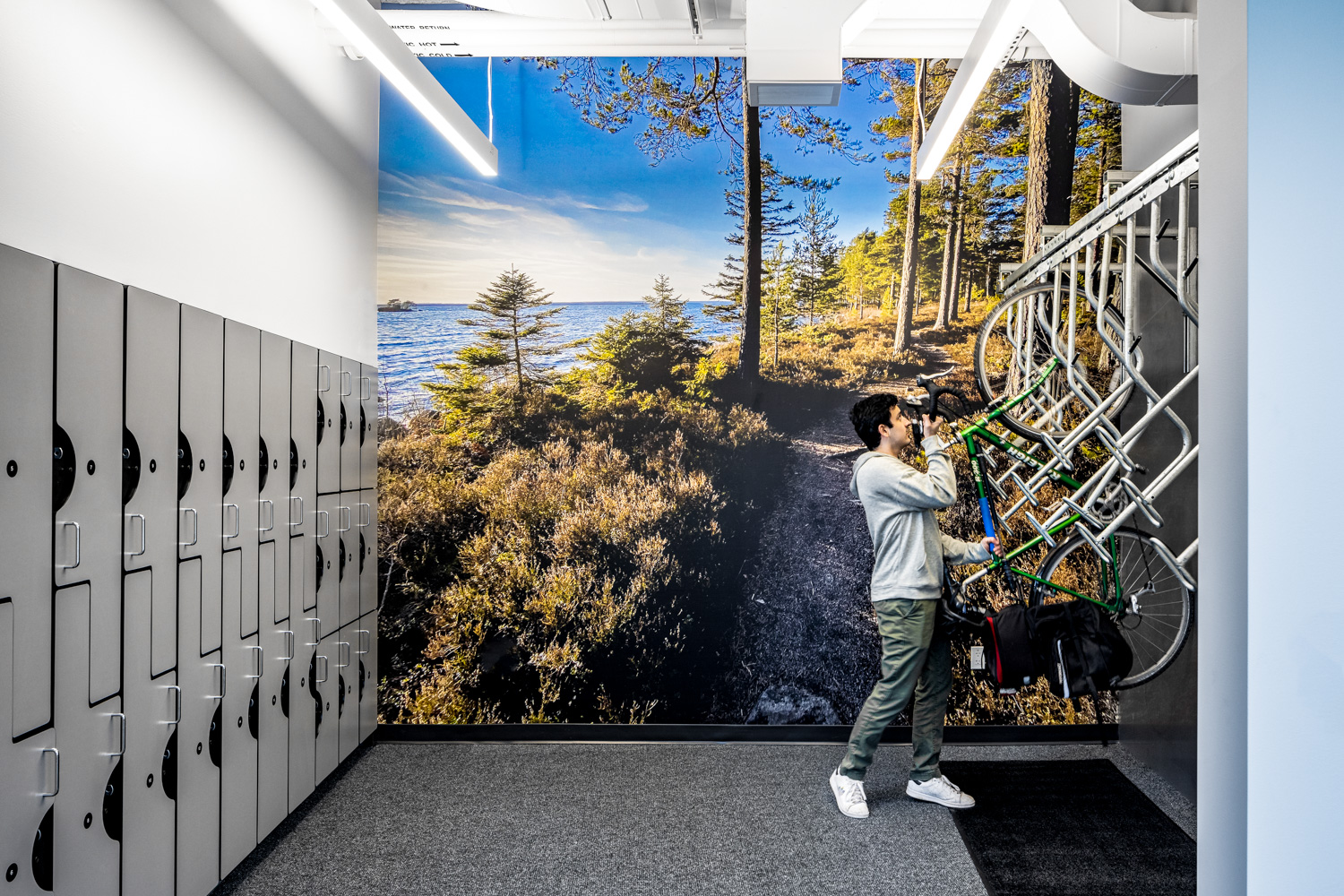
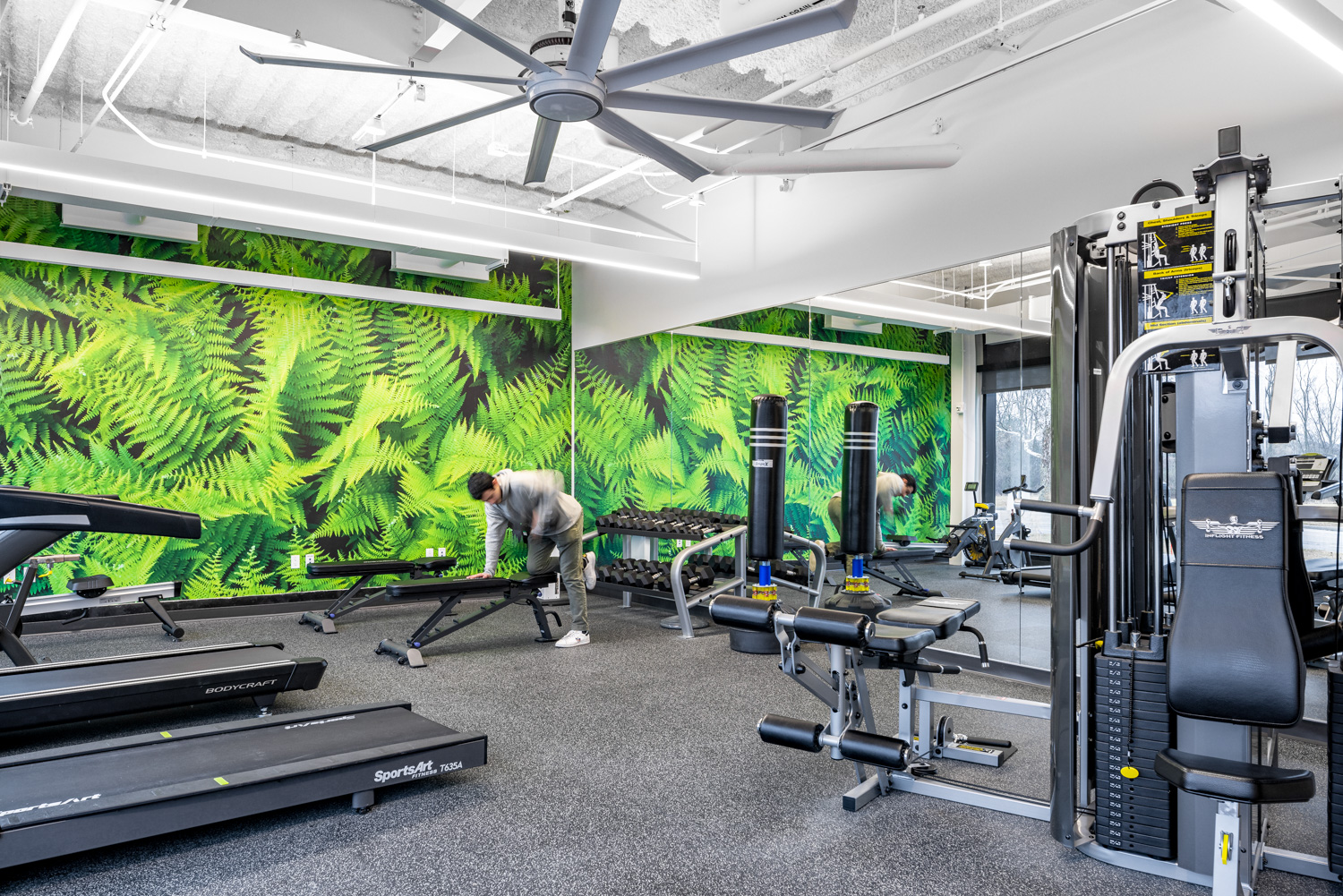
The building had been conceived before the COVID-19 pandemic and completed within a changing workplace environment. Its lobby, main stair, collaboration areas, presentation rooms, flexible offices, shared amenities, and video-call spaces gave the photography a clear architectural focus: how the headquarters supported different forms of individual and shared work.
The engagement was divided across two seasons. Winter production documented the occupied interiors. Summer production returned for the completed landscape, exterior architecture, selected interior views, and aerial context.

Strategic Snapshot
Client: MSU Research Foundation
Project: TechSmith Headquarters
Location: East Lansing, Michigan
Project Type: Workplace architecture
Engagement: Pre-production scout, collaborative photo planning, winter interior photography, summer exterior and aerial photography, and final image refinement
Intended Uses: Award submissions, portfolio presentation, websites, proposals, and project marketing
Recognition: 2024 AIA Detroit Architectural Award
Final Deliverables: 37 final edited photographs, including 17 winter interiors and 20 summer exterior, aerial, and selected interior views
Project Context
MSU Research Foundation owned the building, commissioned the photography, coordinated the engagement, and led the planning process.
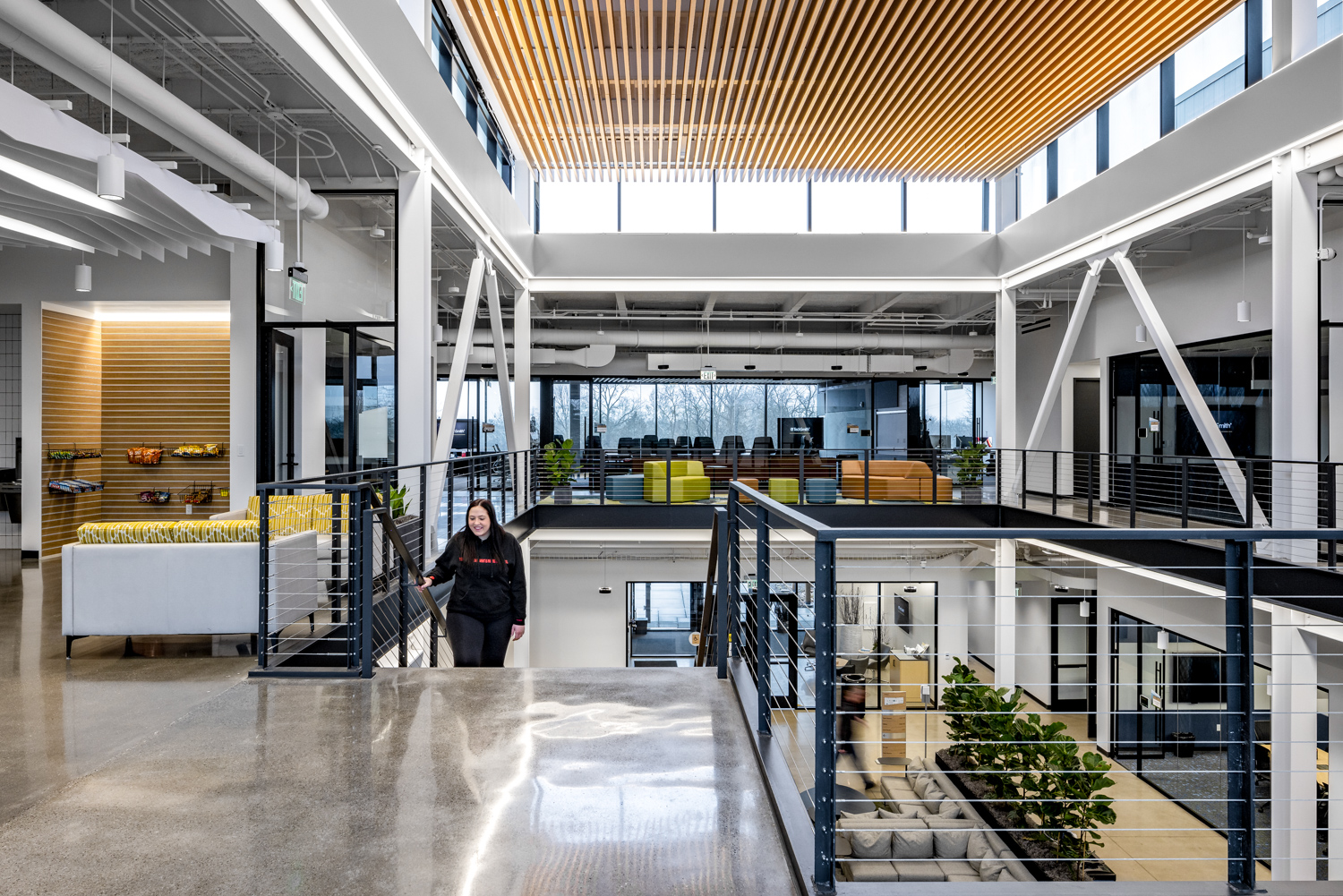
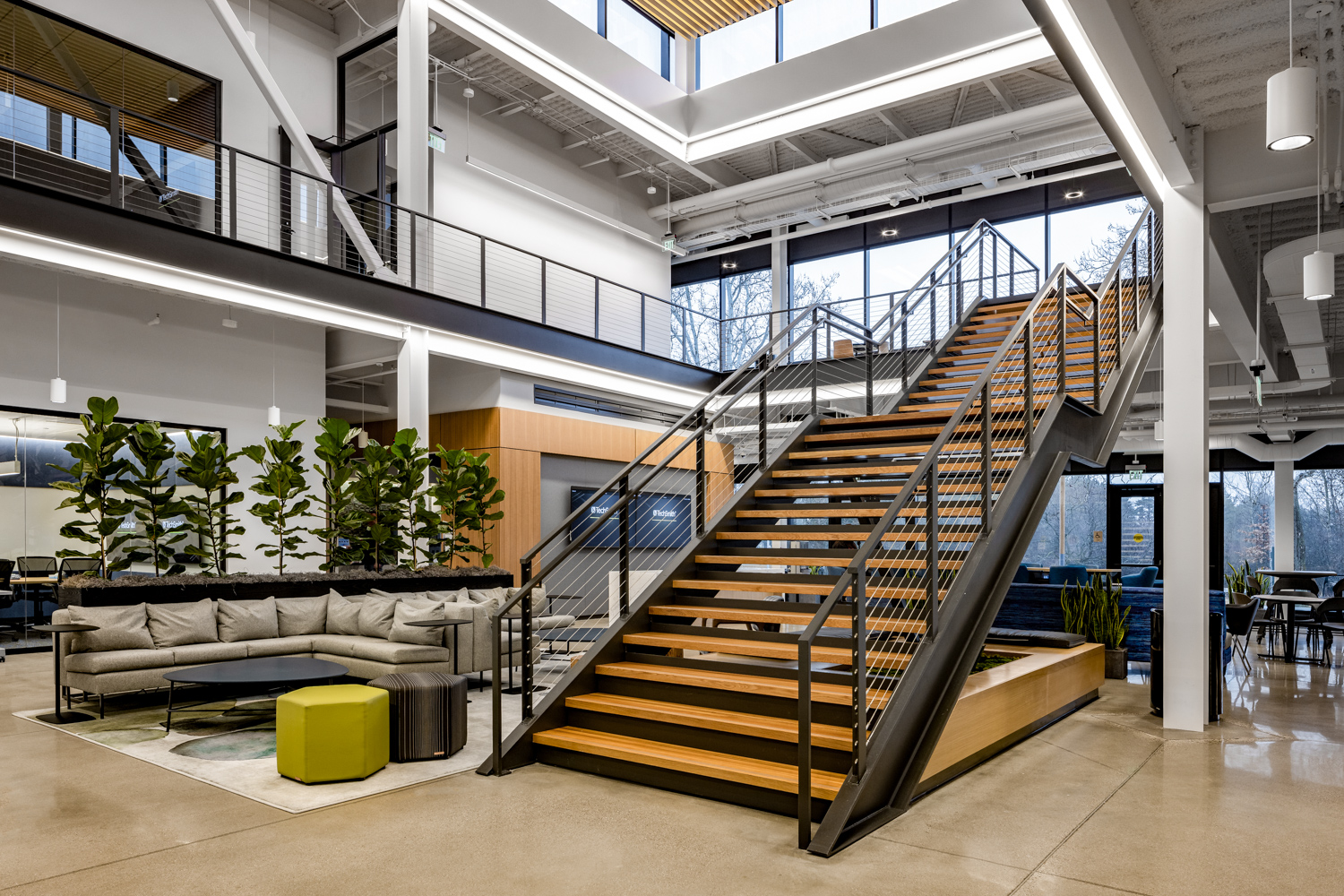
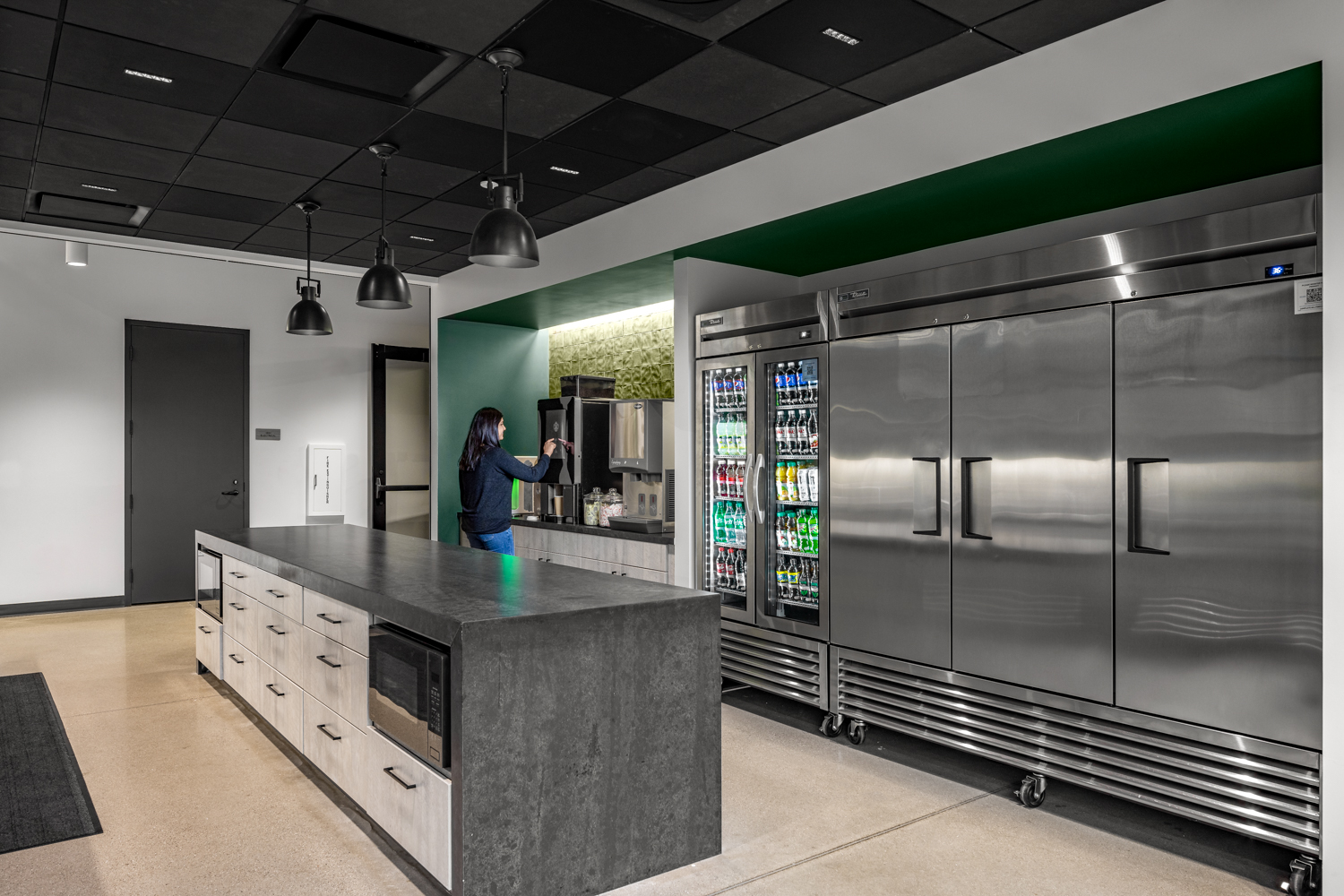
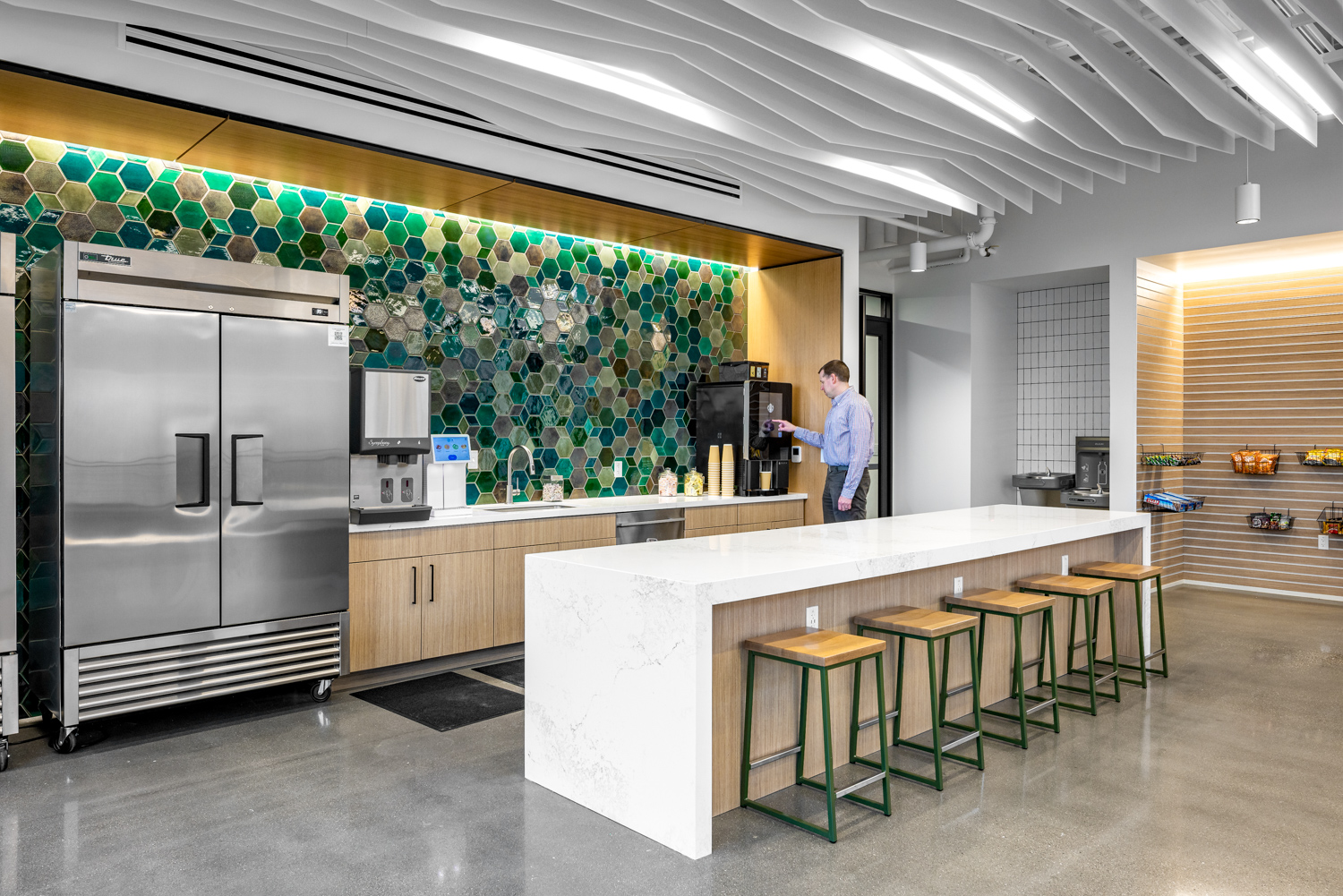
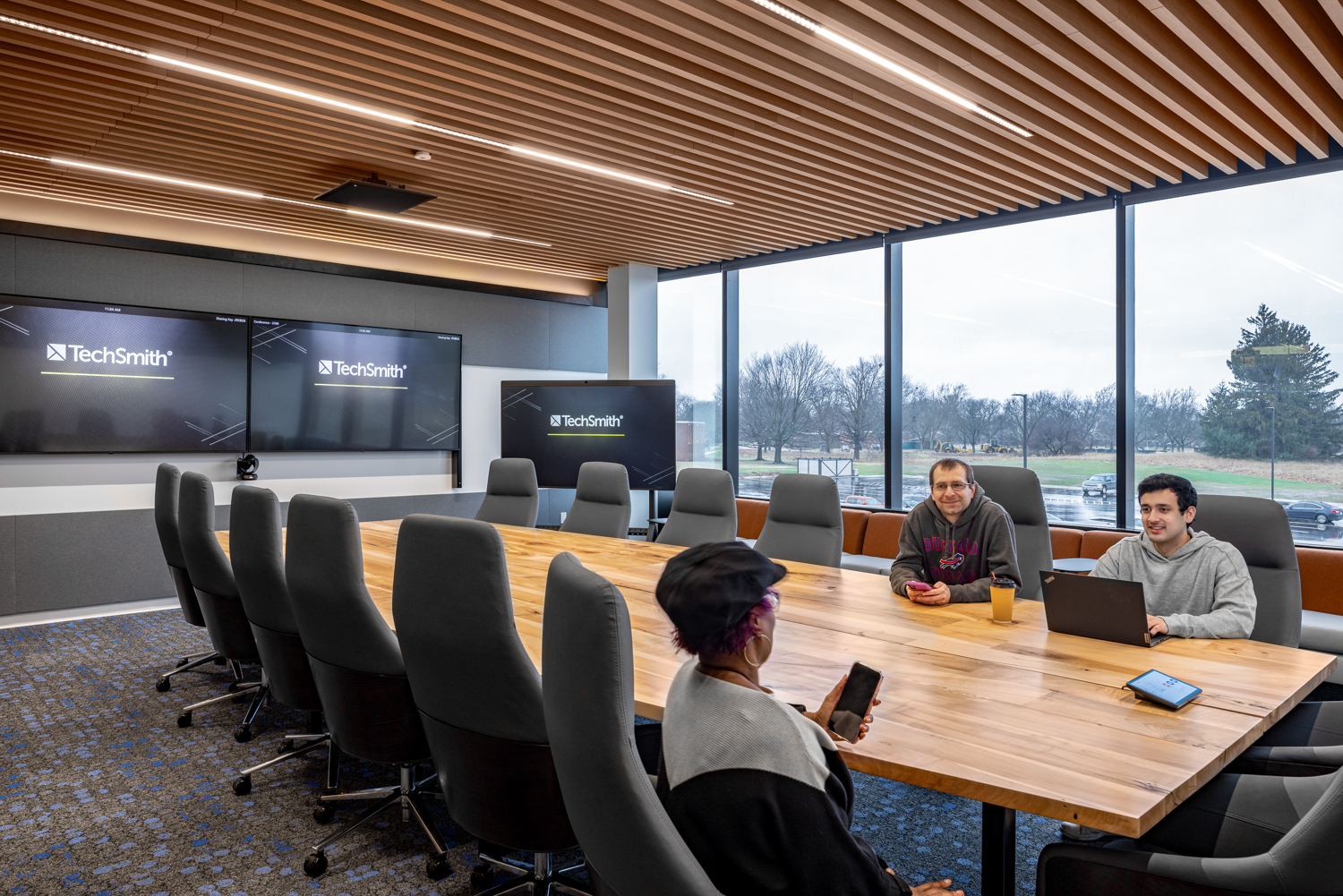
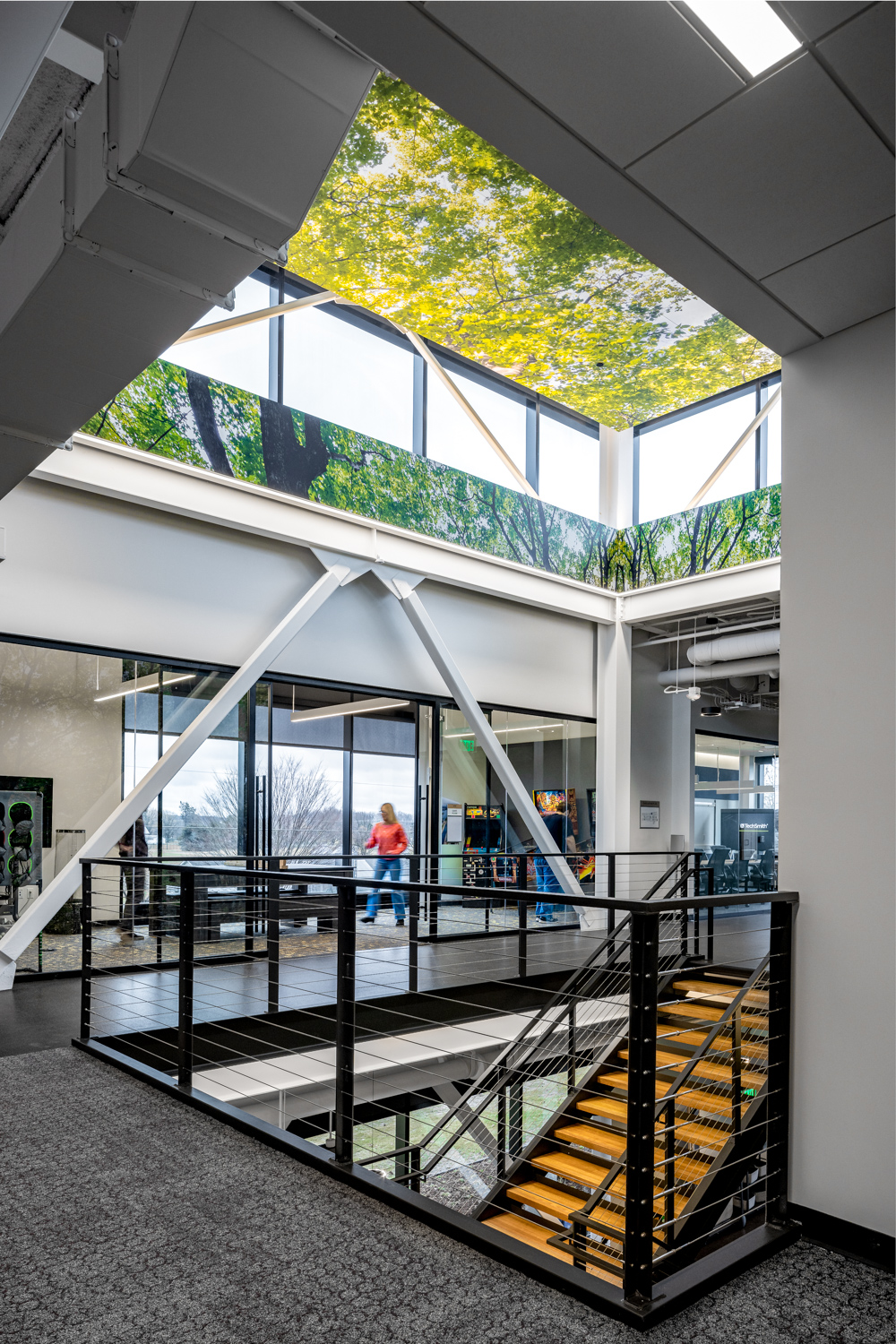
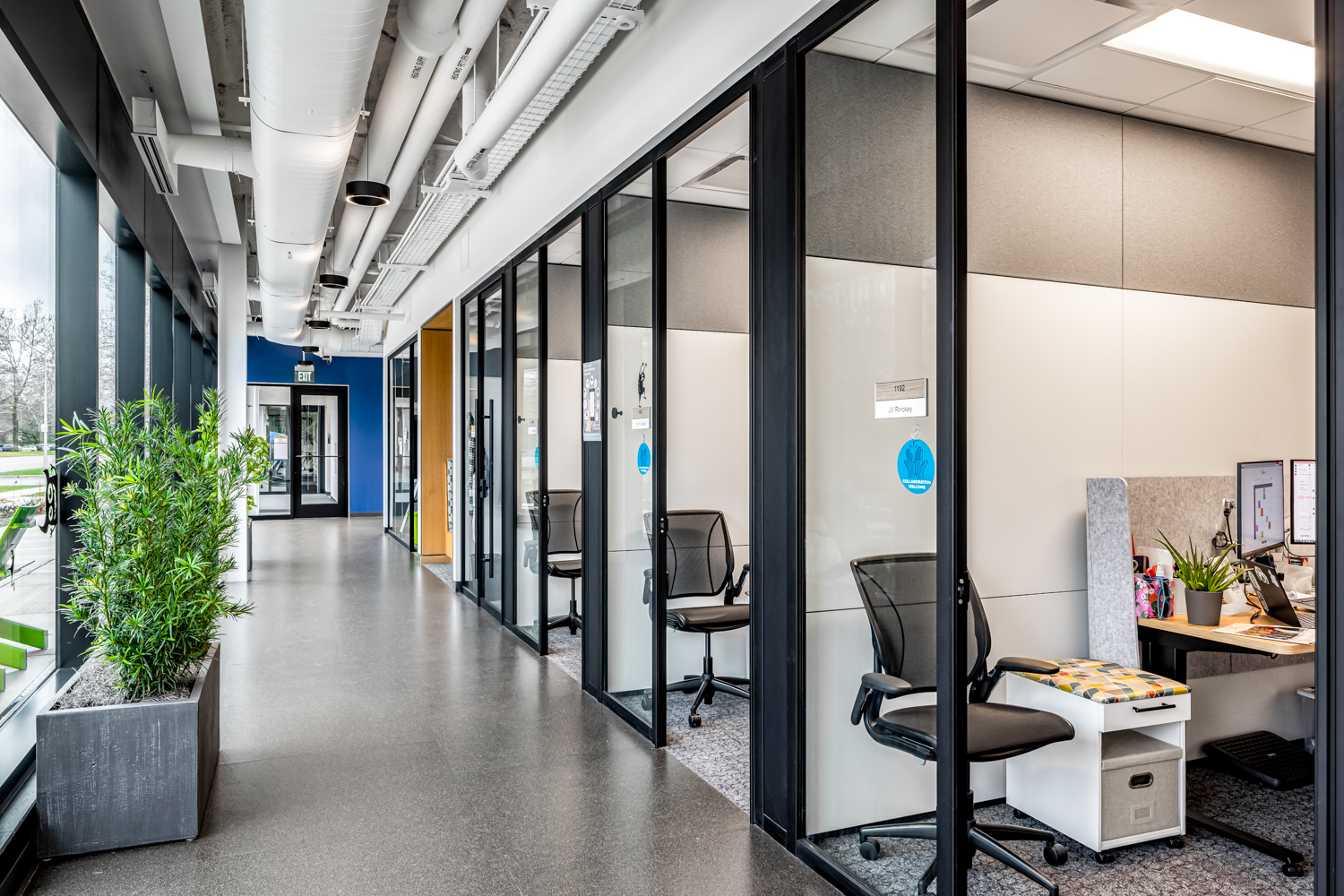
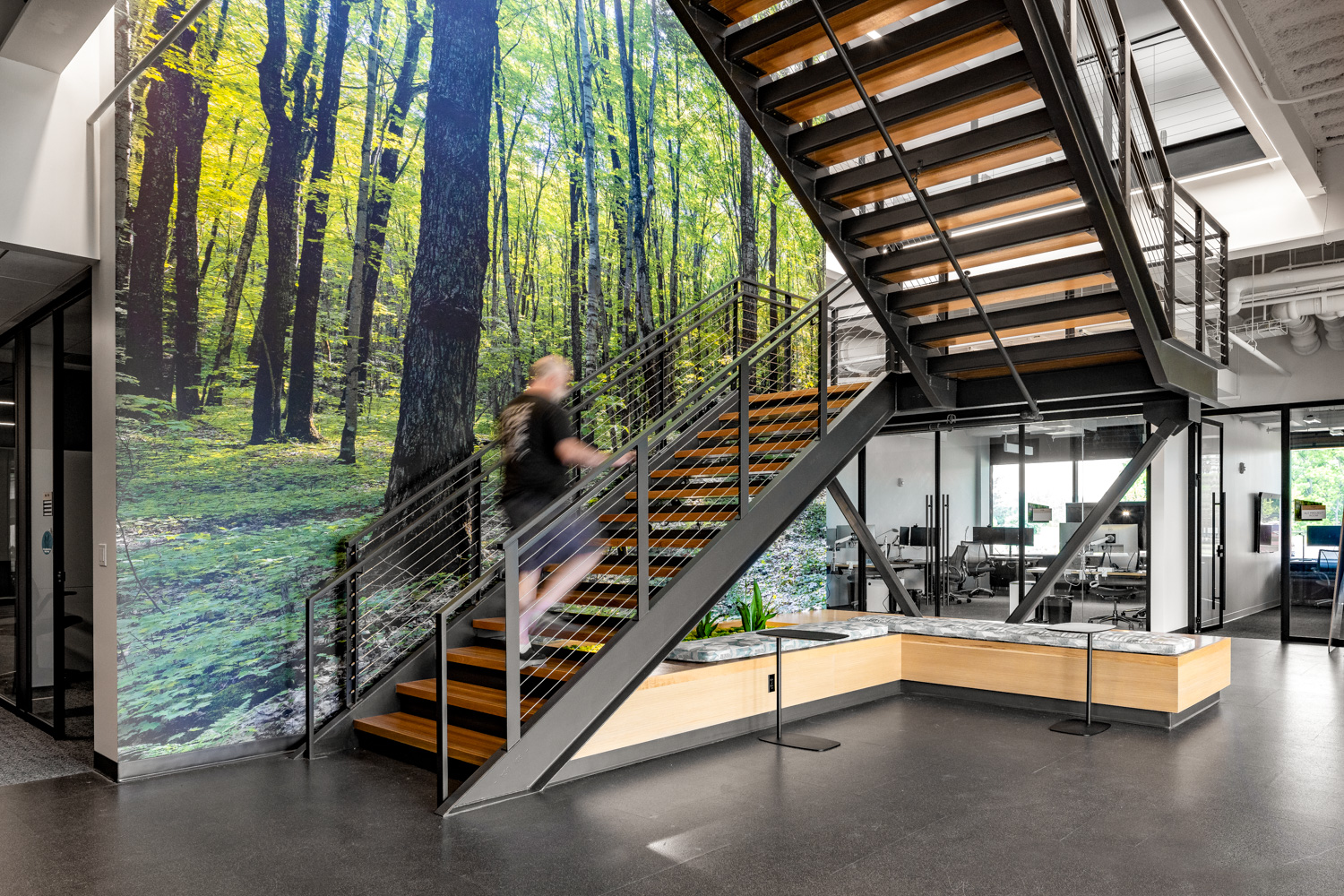
The interior photography concentrated on the spaces that most clearly explained the workplace. The lobby and main stair established arrival and circulation. Conference rooms, presentation areas, flexible offices, video-call rooms, and shared amenities showed how enclosed and open environments related to one another.
TechSmith employees appeared throughout selected scenes. Their placement clarified movement, meetings, presentations, focused work, and informal gathering without shifting the assignment away from the architecture.
Planning the Photography Across Two Seasons
Planning began with a formal walkthrough and a set of scout photographs used to prepare the visual plan.
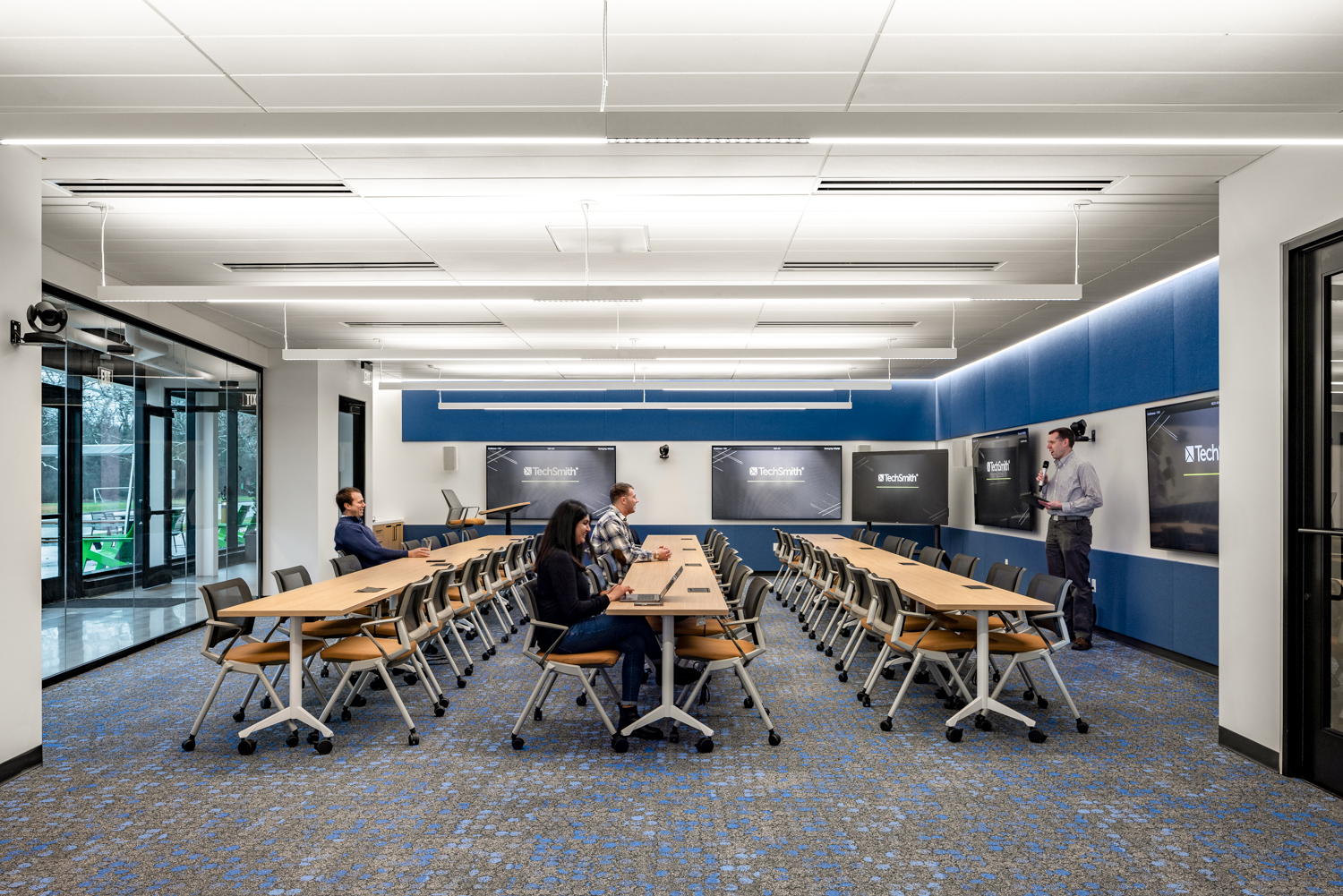
The plan identified proposed camera positions, alternate views, image priorities, and intended activity within each space. It included movement through the main stair, meetings near the entrance, presentations in the classroom, work in flexible office areas, and employee use of conference and shared amenity spaces.
MSU Research Foundation led the review before production, with participating project firms contributing to the planning process.
The seasonal split allowed the interior and exterior phases to follow the actual condition of the project. The headquarters could be photographed in use during winter, while the exterior and aerial views could wait until the landscape was complete.
The winter phase produced 17 final photographs. The summer phase added 20 exterior, aerial, and selected interior views.
Production in an Occupied Workplace
The headquarters remained in use during both sessions. TechSmith employees were directed in meetings, stair movement, presentation spaces, flexible work areas, and informal gathering zones while normal workplace activity continued around the production.
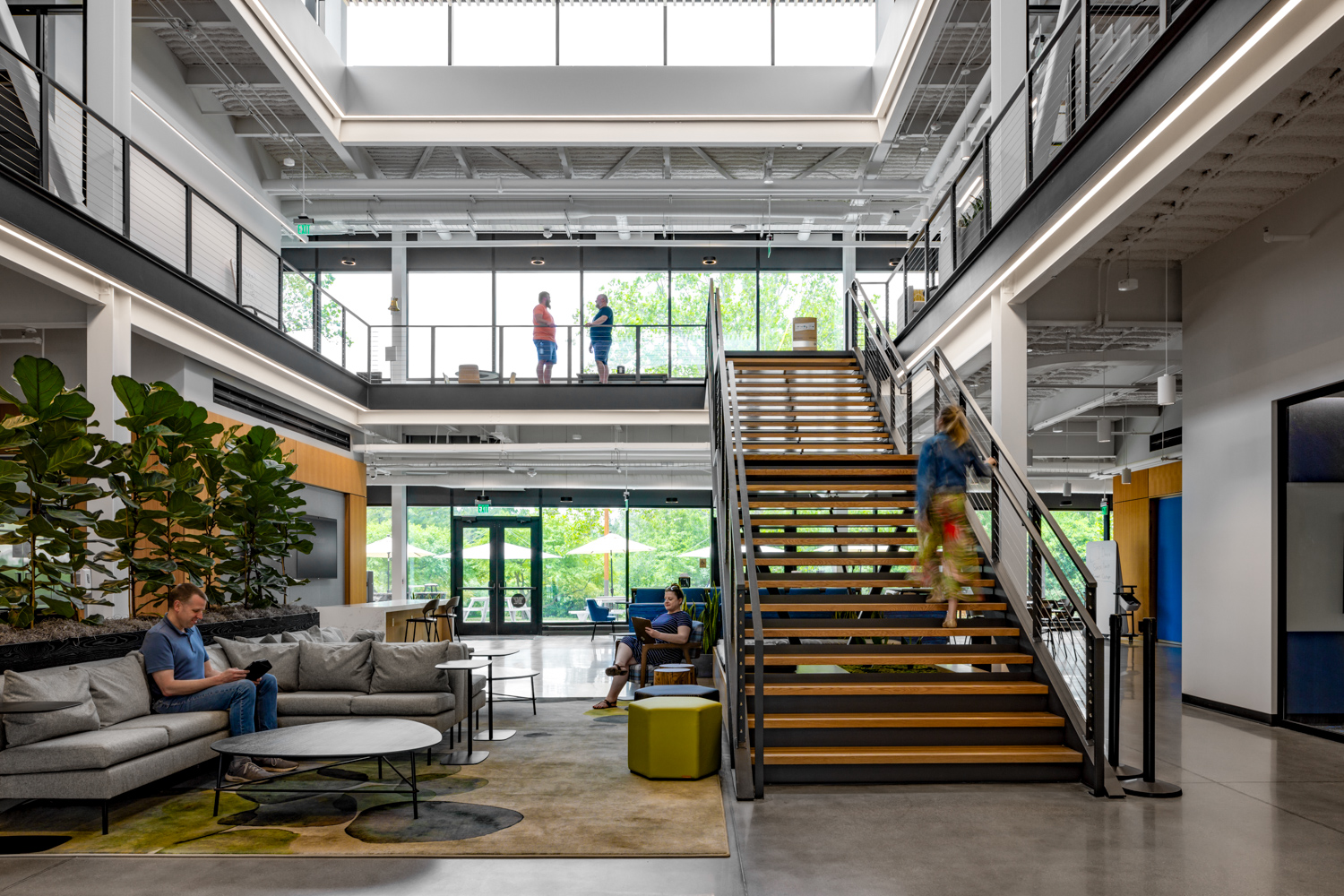
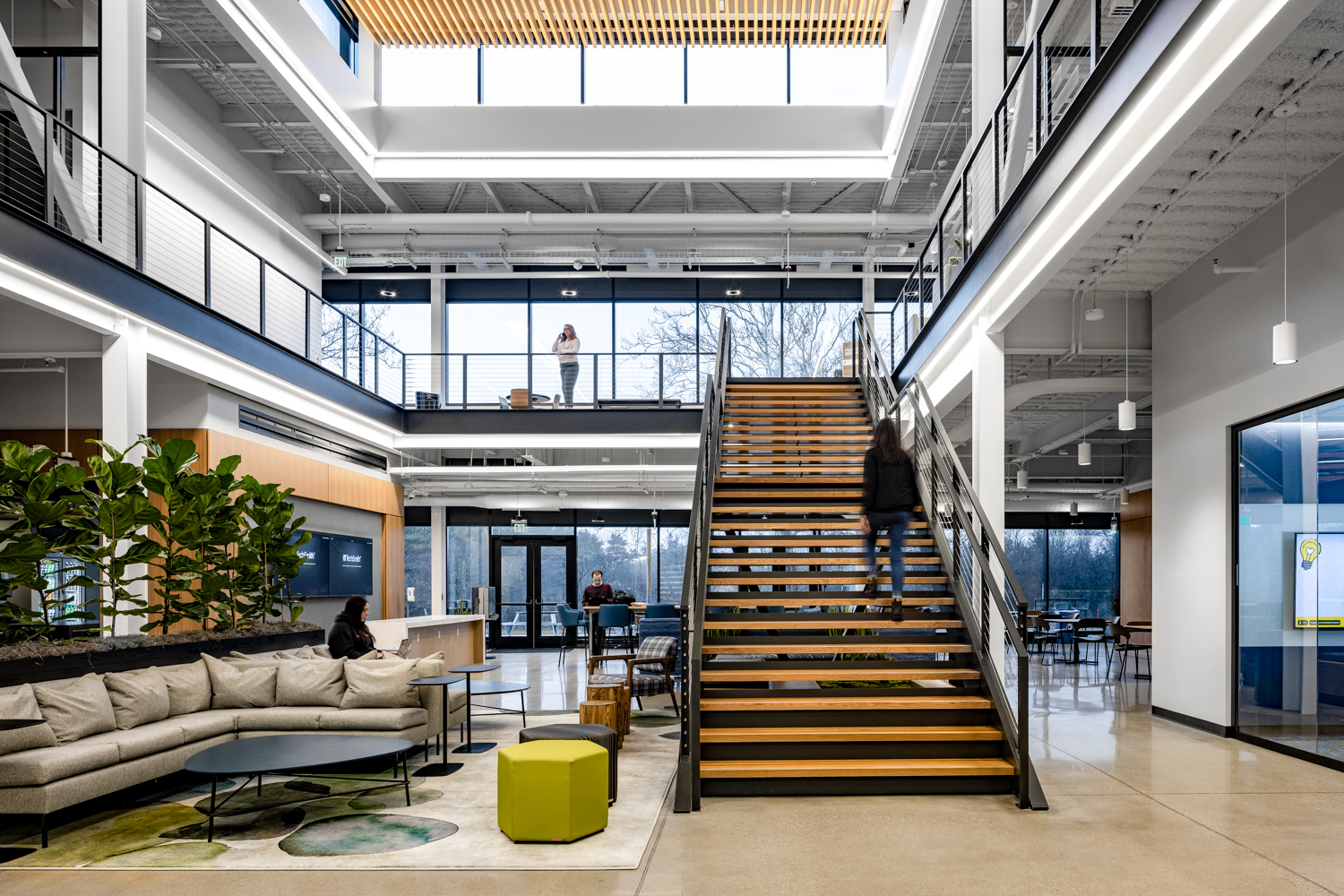
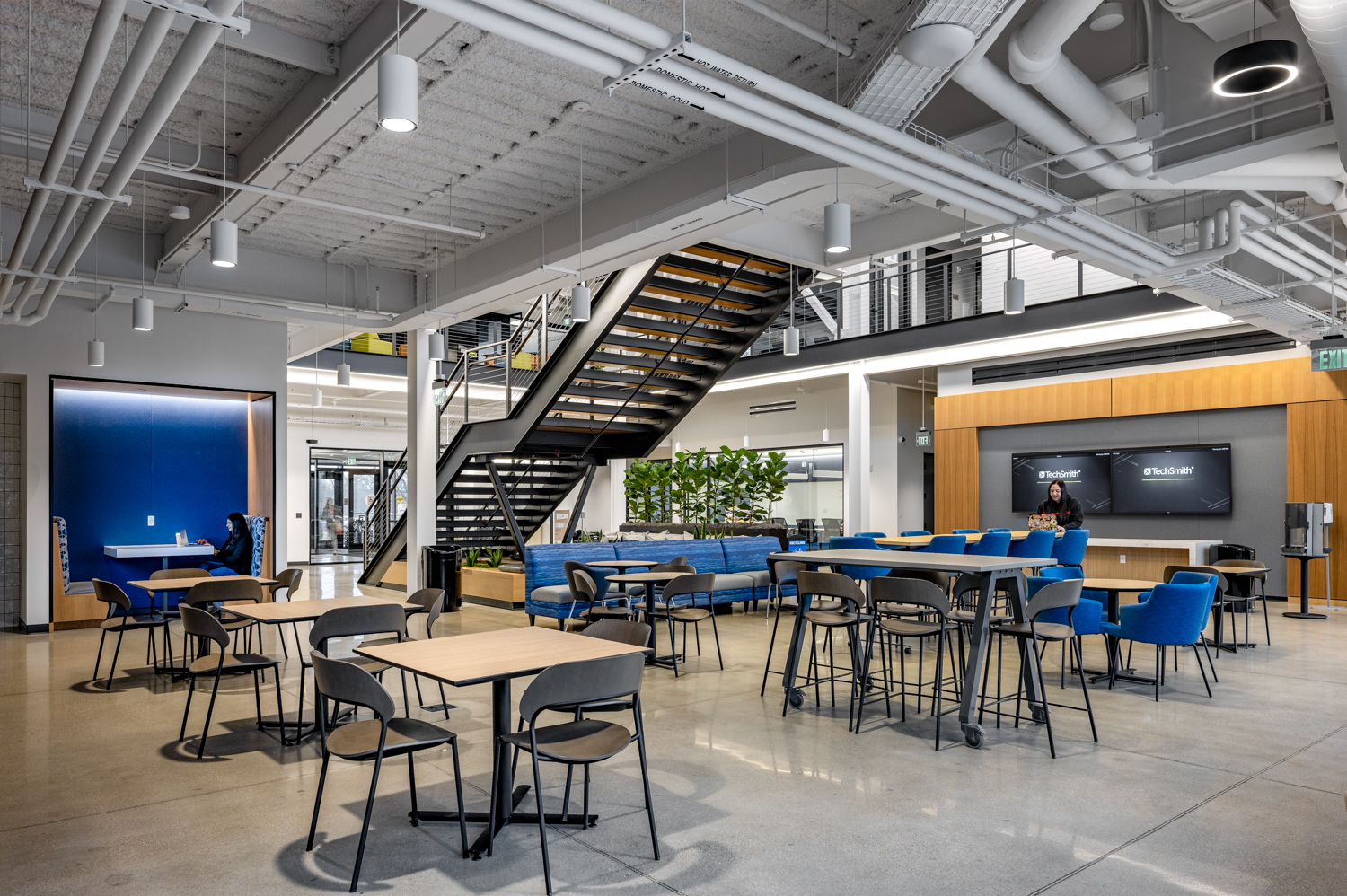
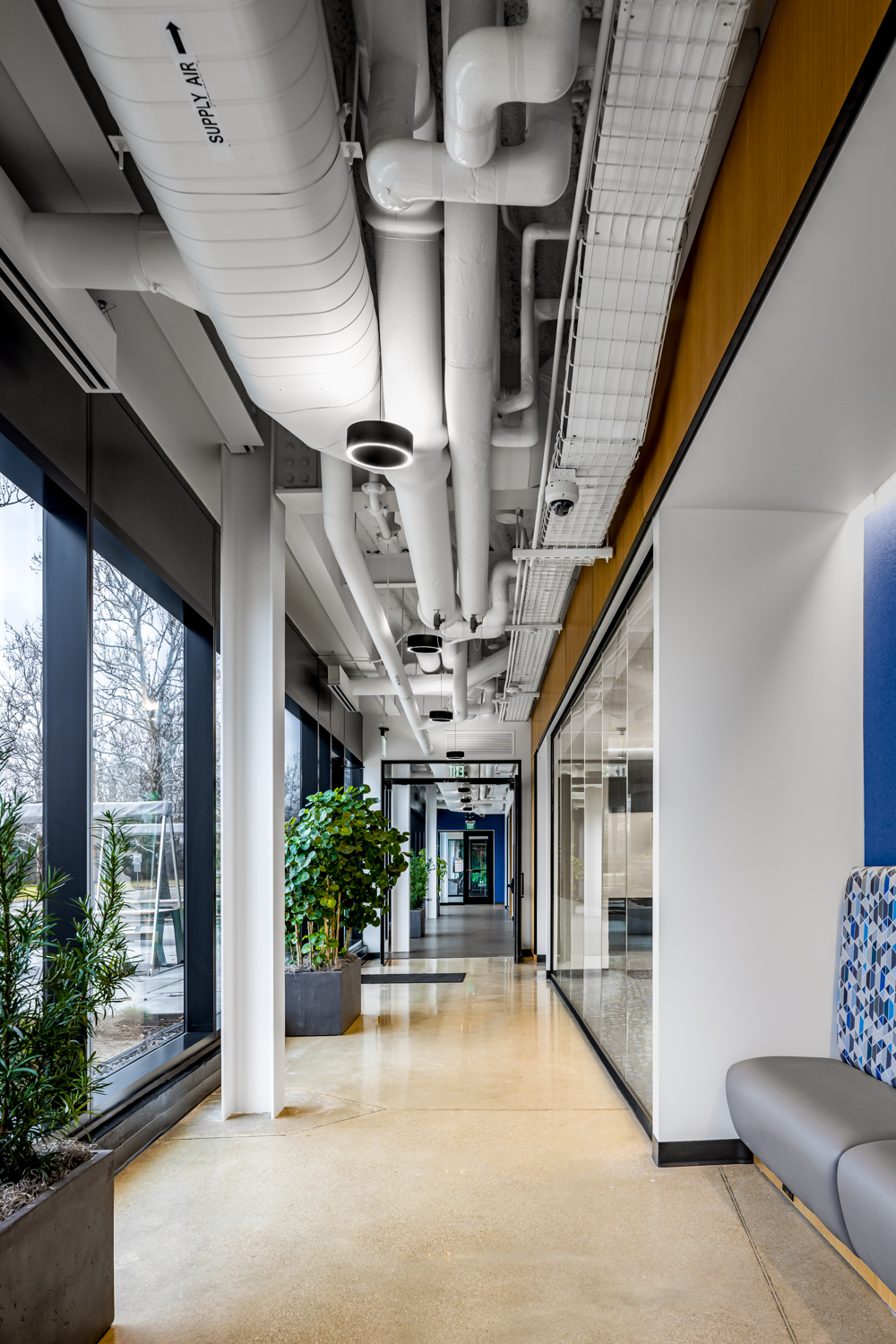
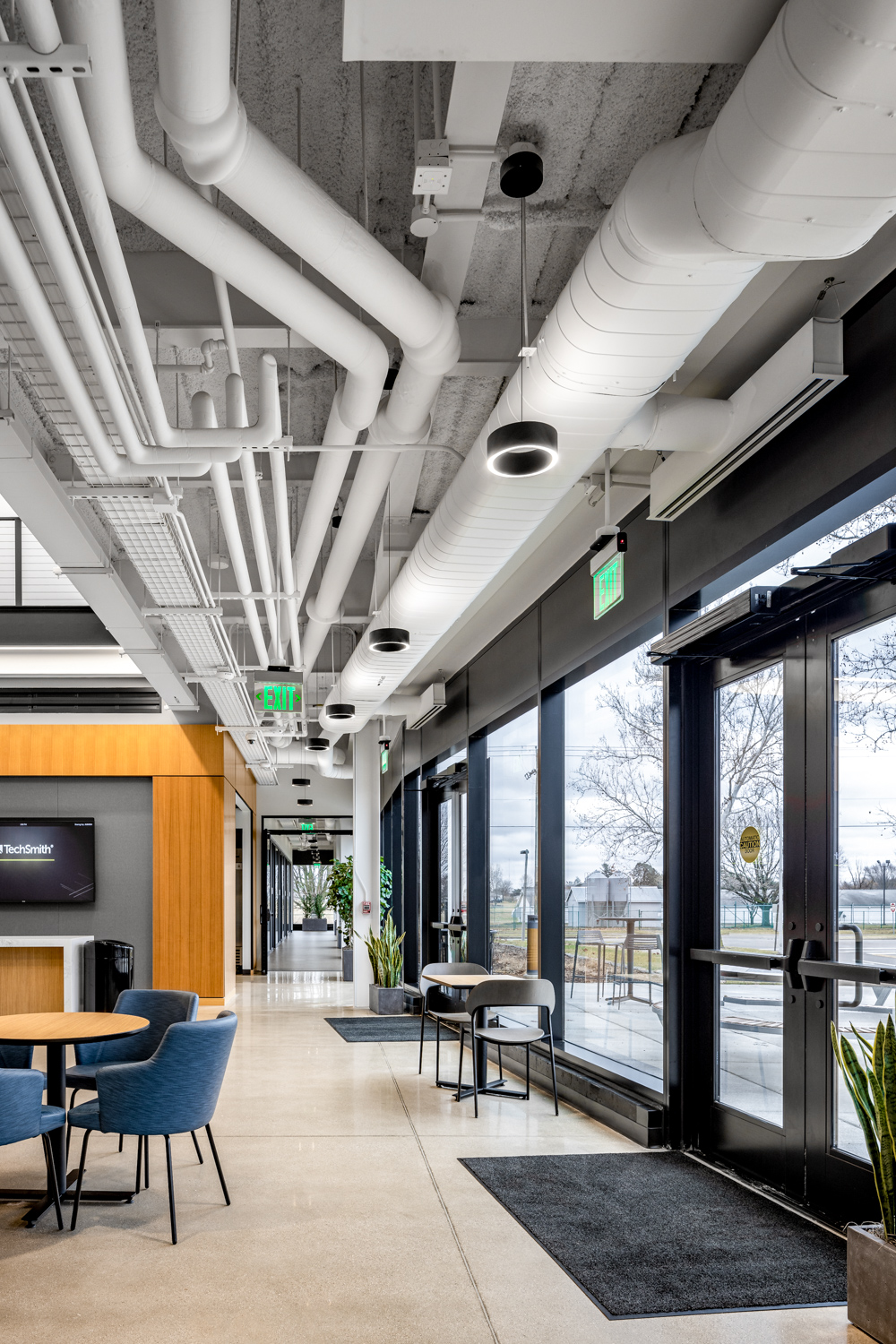
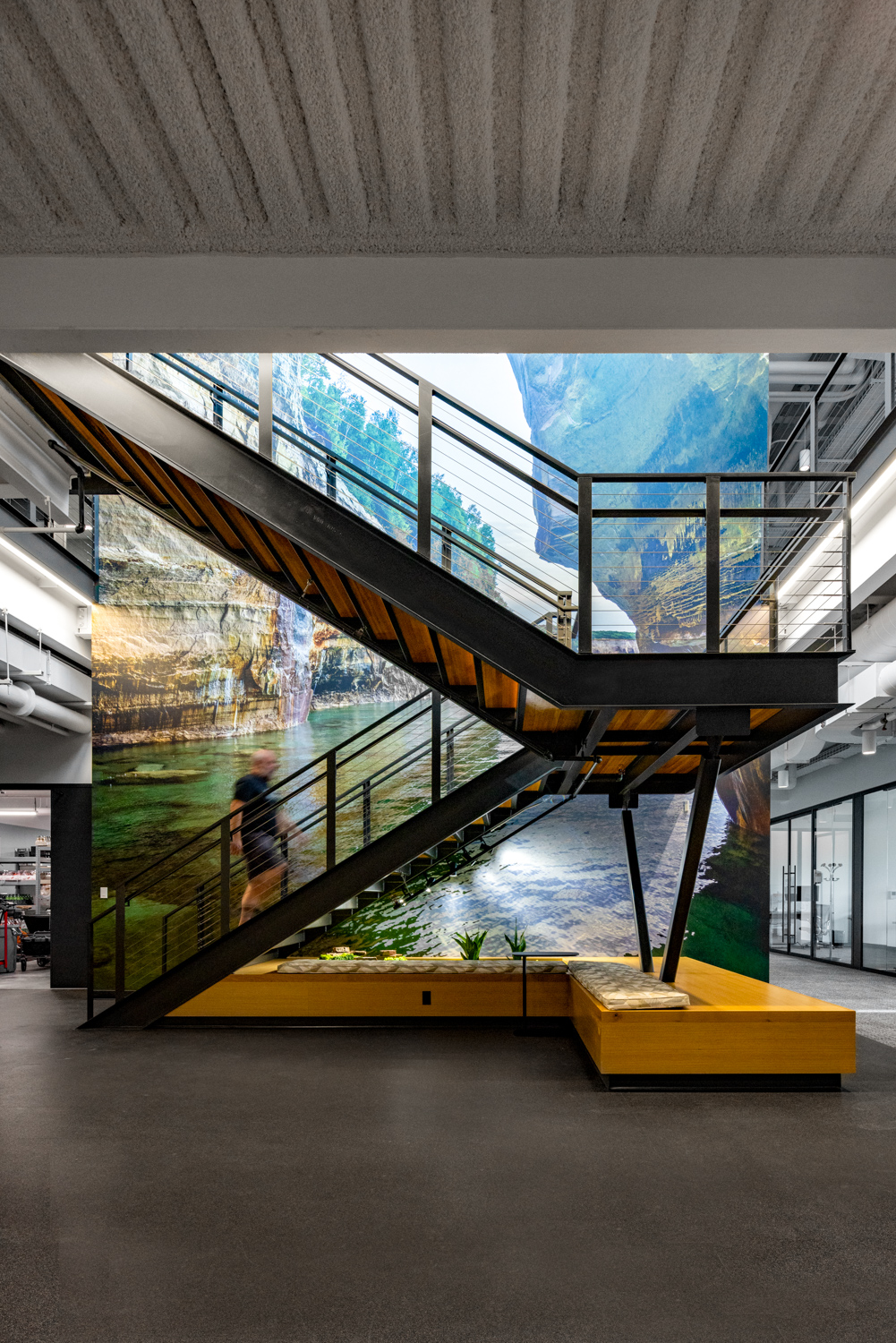
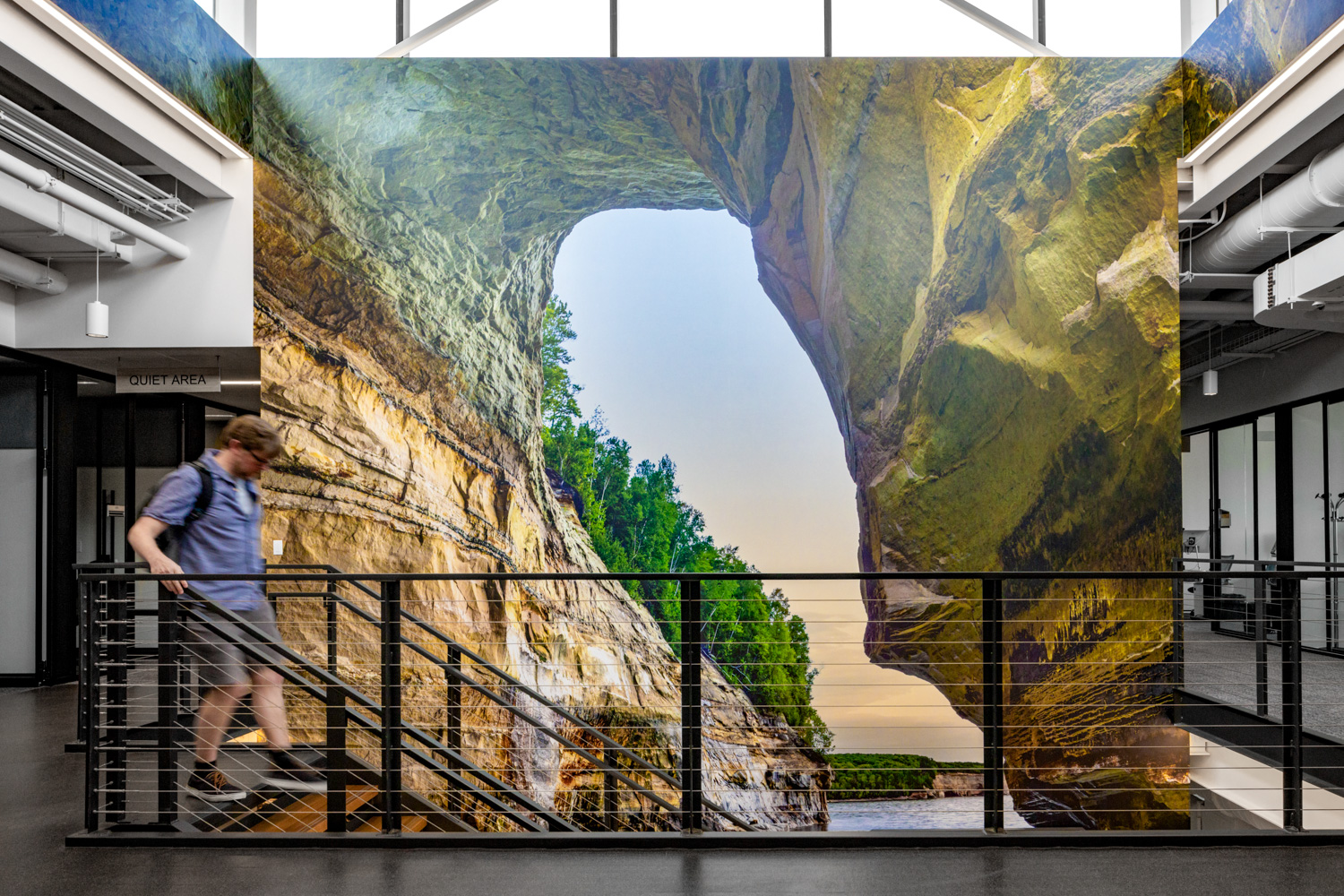
The lobby and main stair carried much of the interior sequence. Their position within the building made it possible to show arrival, circulation, informal seating, adjacent rooms, and the relationship between the two levels within a limited group of views.
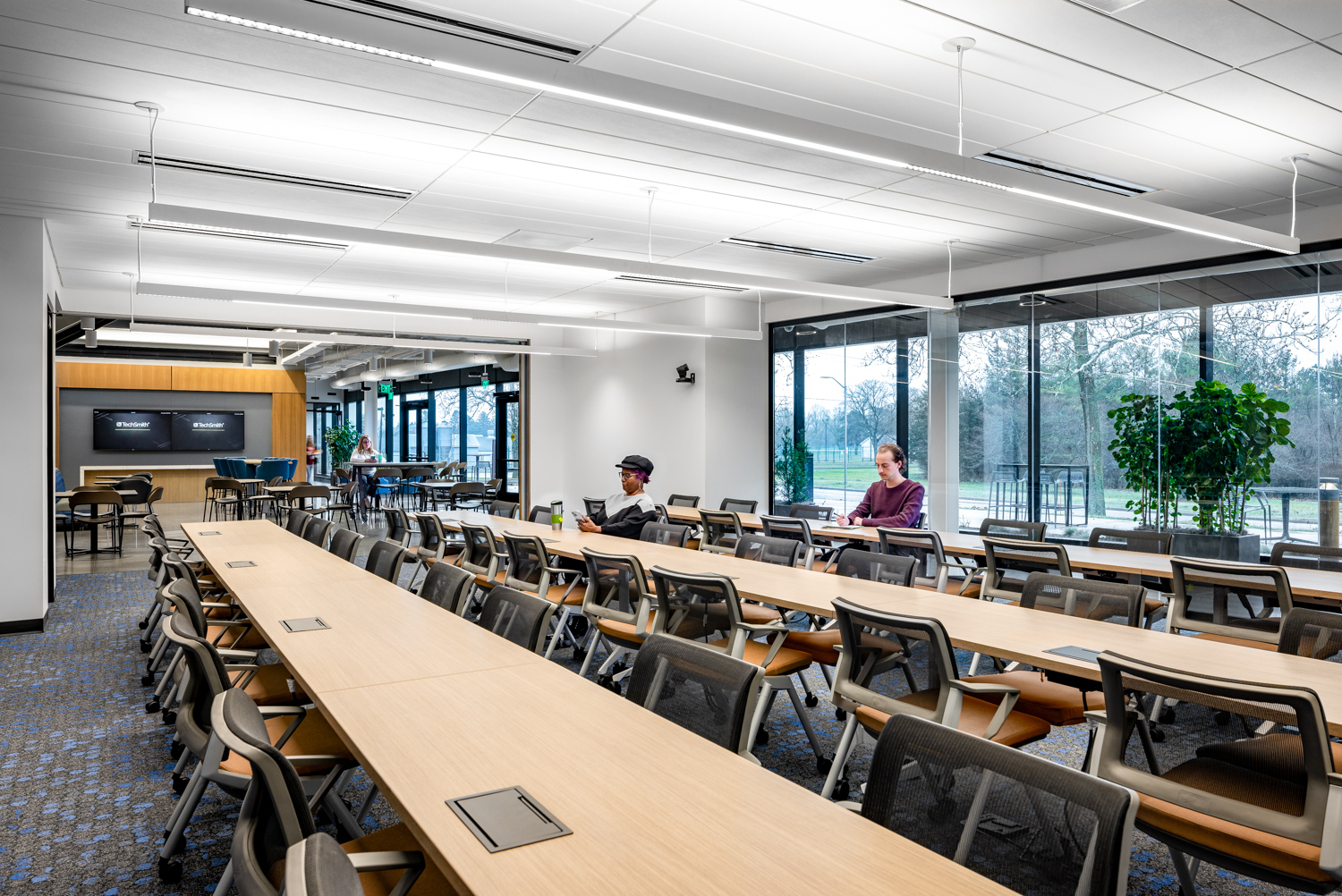
The surrounding rooms expanded that sequence. Enclosed meeting spaces, open work areas, presentation rooms, and video-call spaces showed how the headquarters moved between focused work and collaboration.
Architectural Approach
Wide views established the scale and organization of the headquarters. Mid-range compositions clarified the relationships among circulation, furniture, technology, and adjacent work areas.
Glass was present throughout the building. It created long sightlines between rooms, carried daylight deeper into the plan, and allowed activity to remain visible across spaces with different functions.
Human presence remained specific to the architecture. A person moving through the main stair clarified circulation. Small meetings showed how enclosed rooms related to the open workplace. Employees in flexible office areas helped make different patterns of use visible without displacing the building as the primary subject.
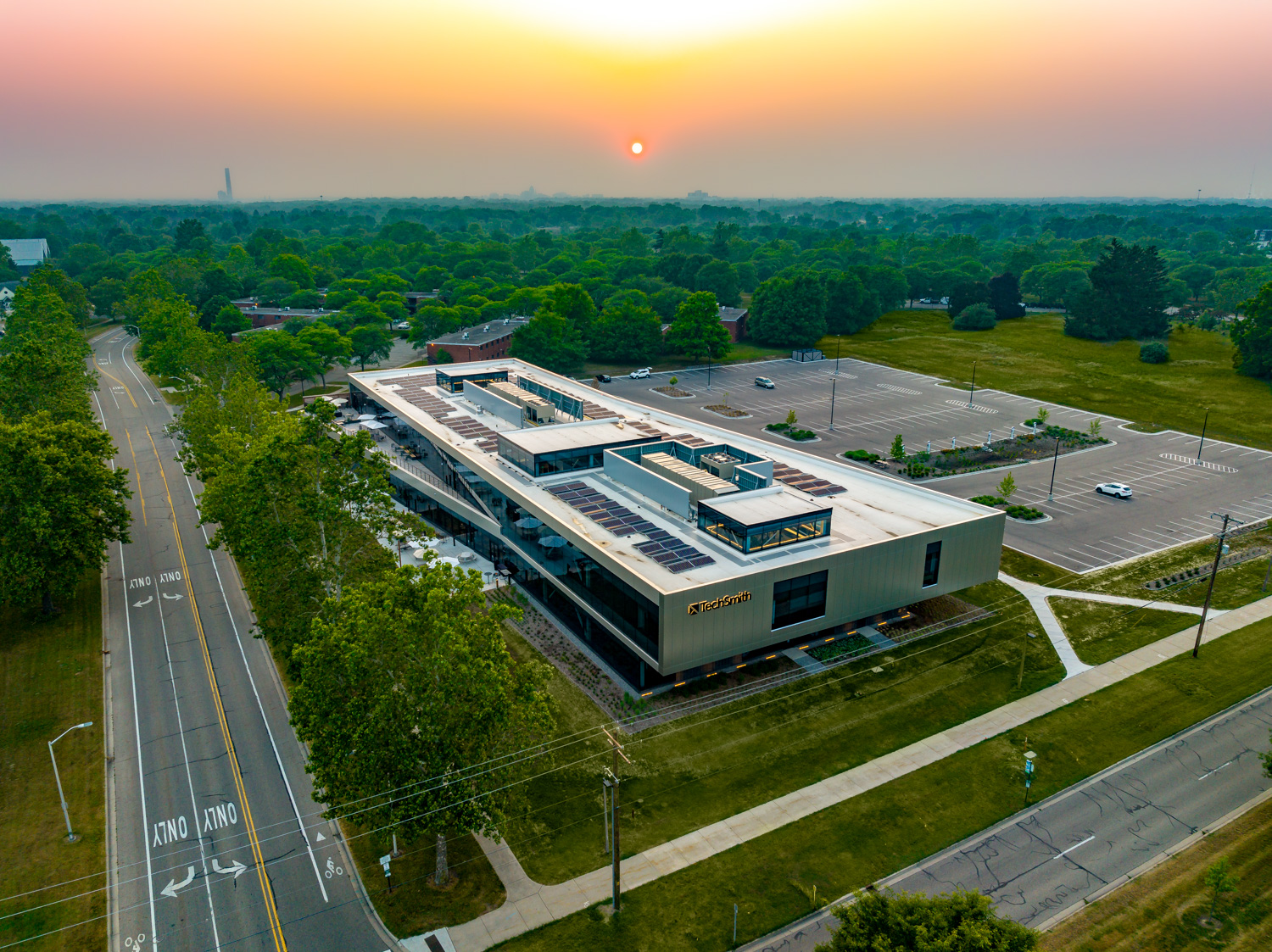
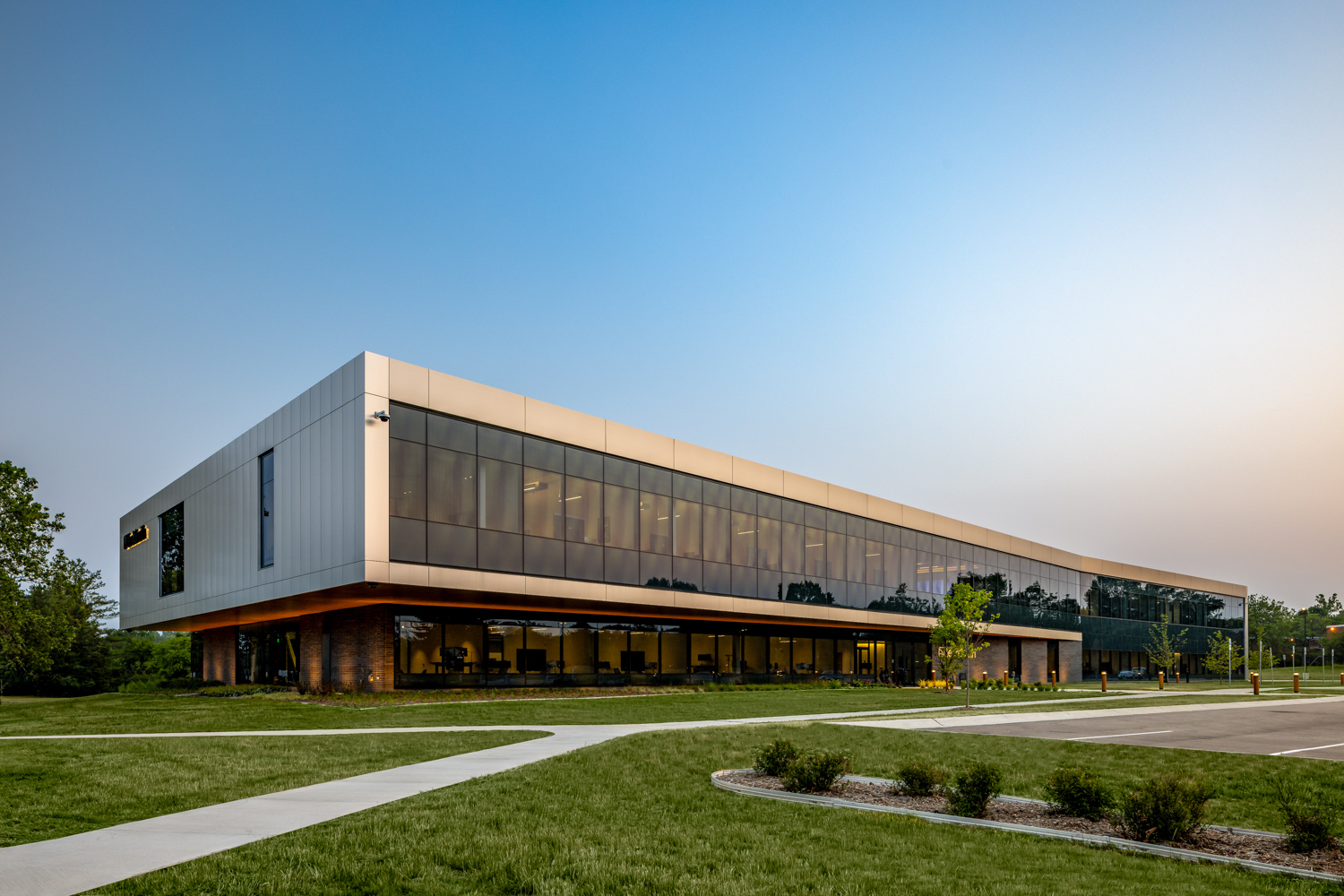
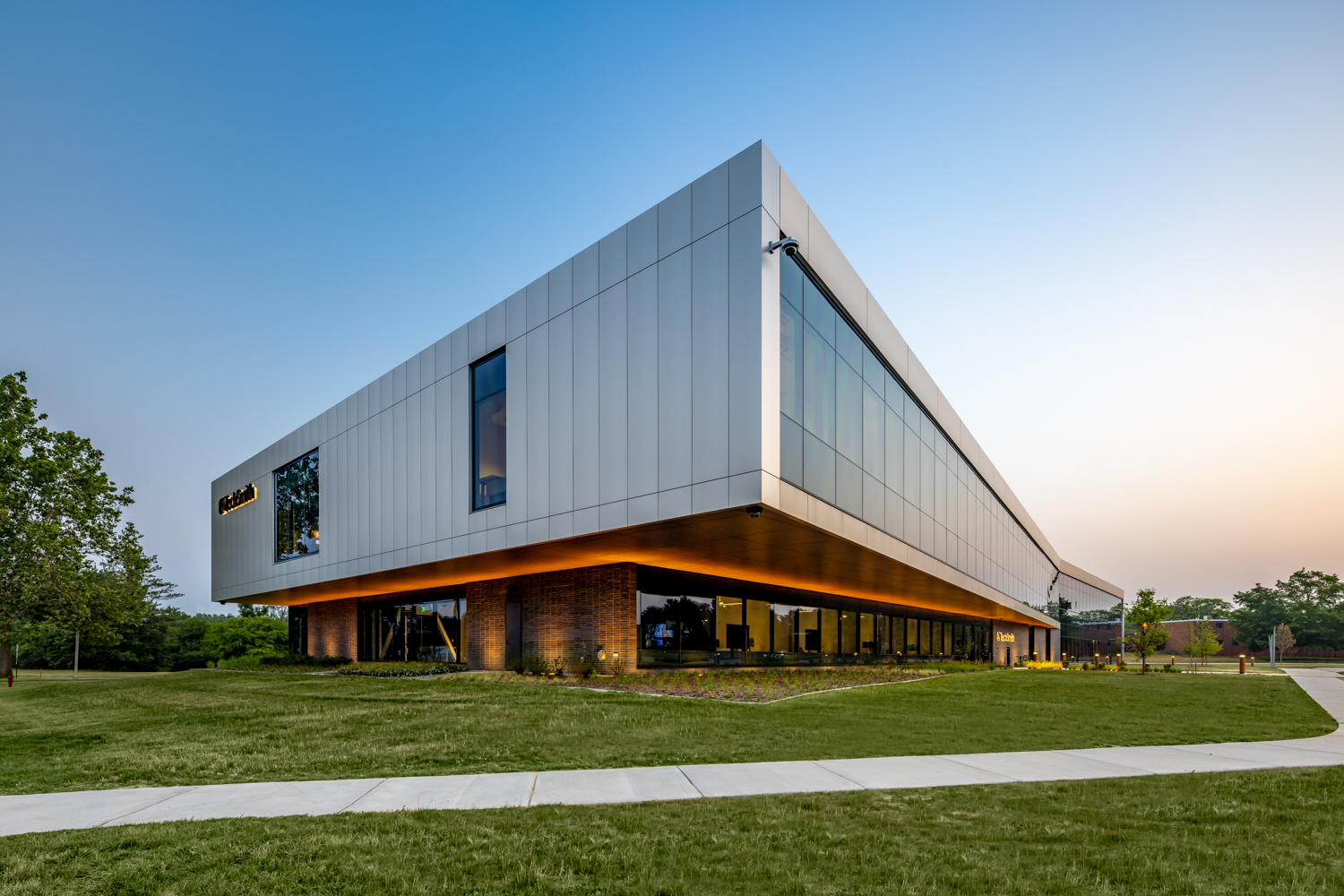
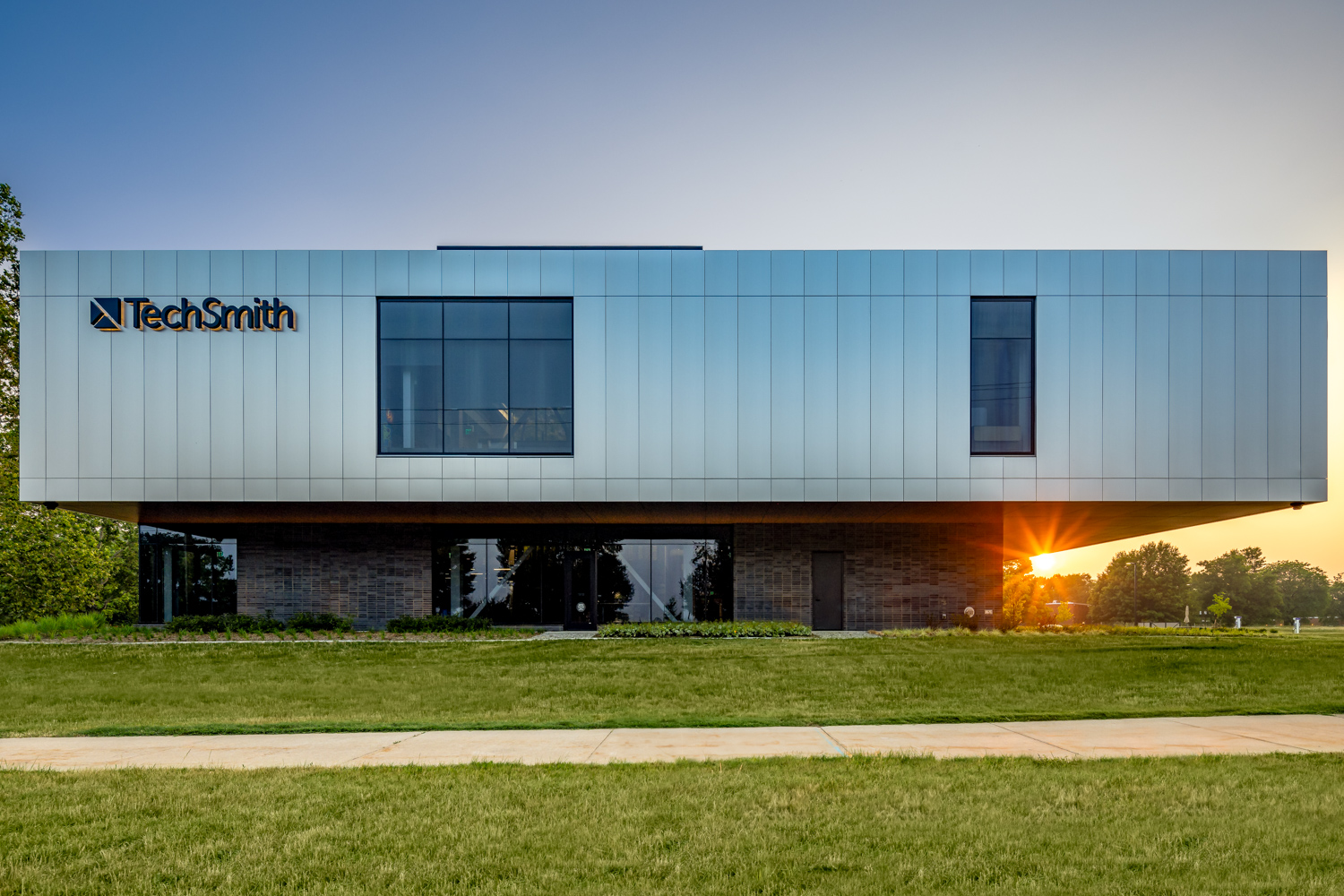
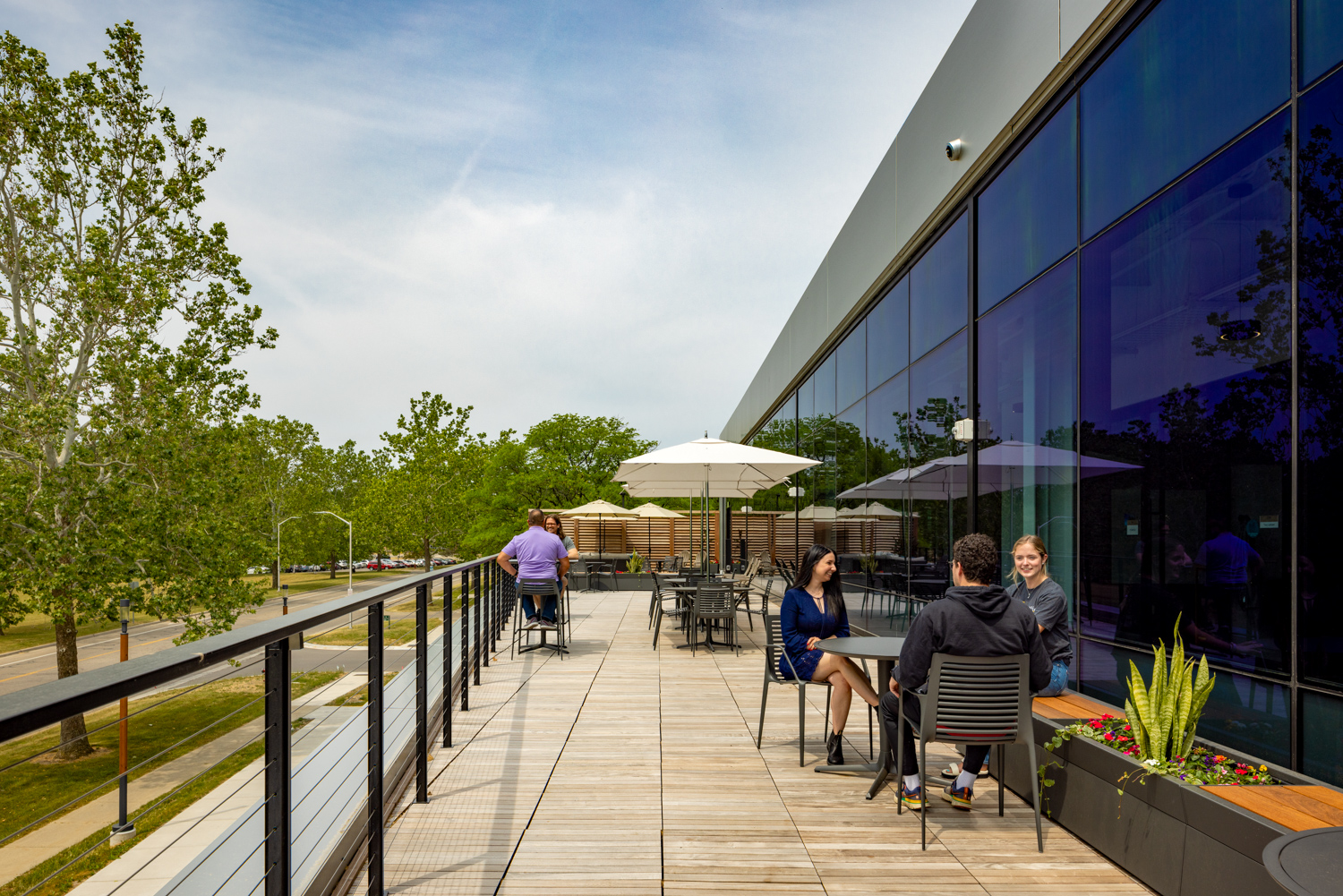
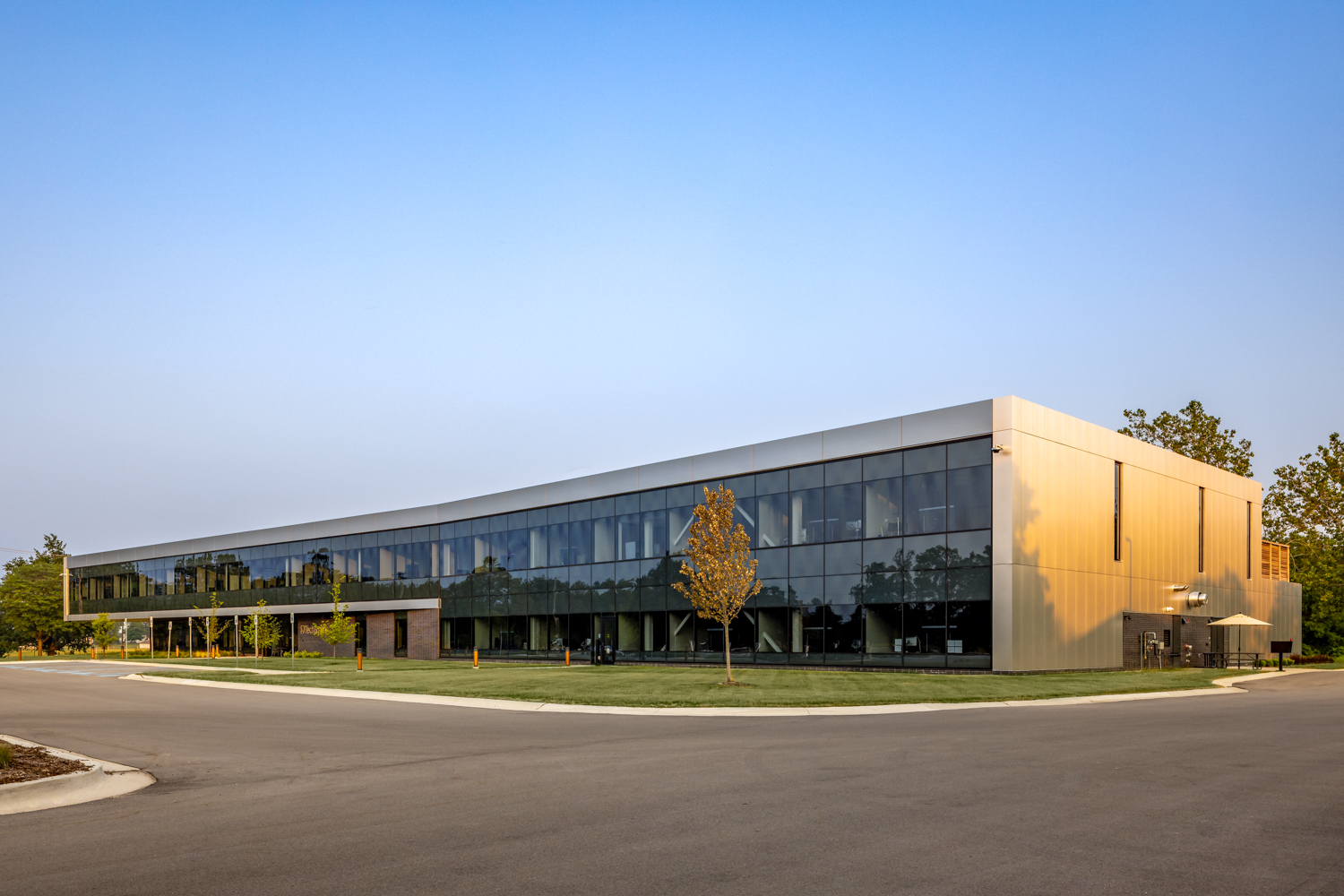
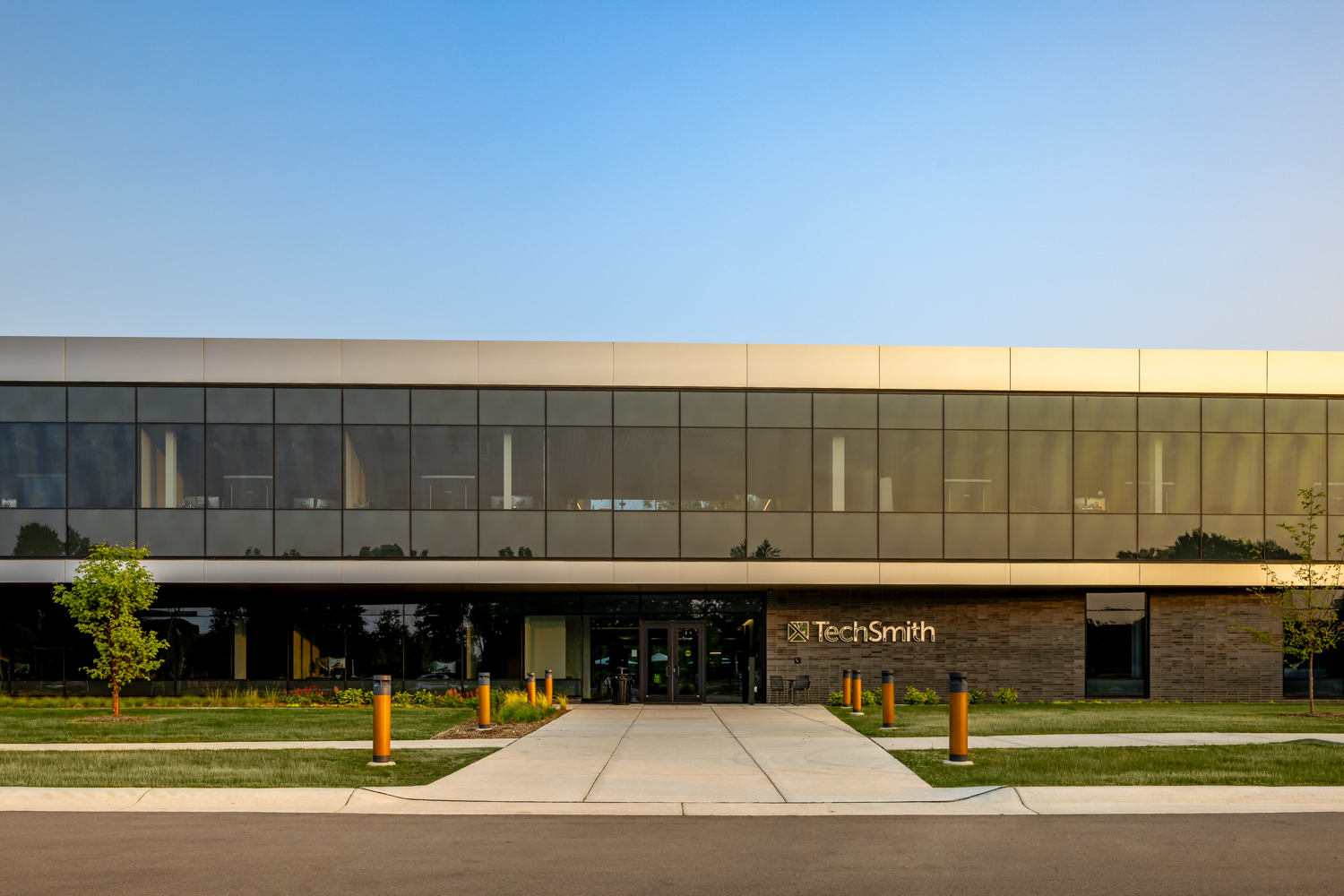
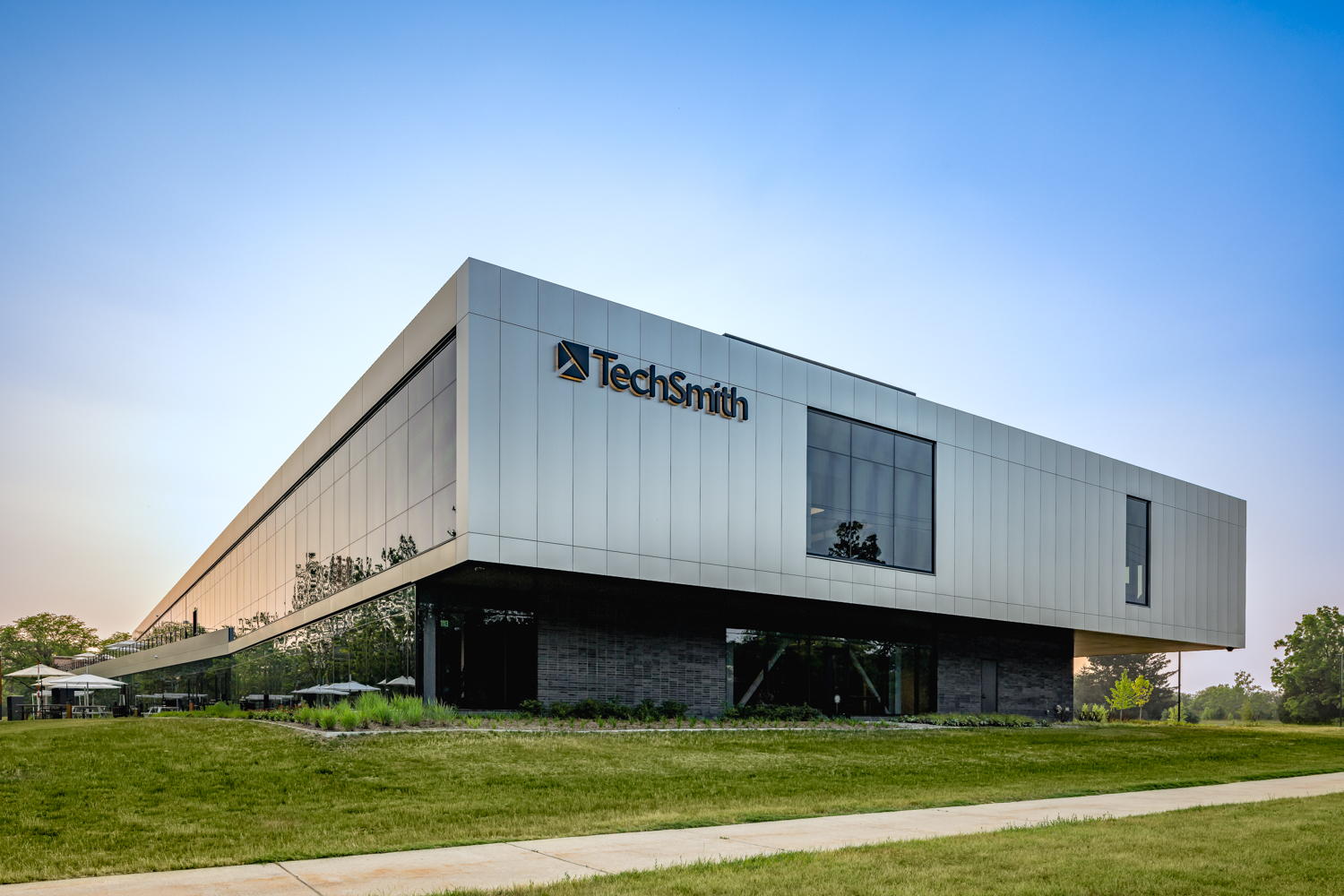
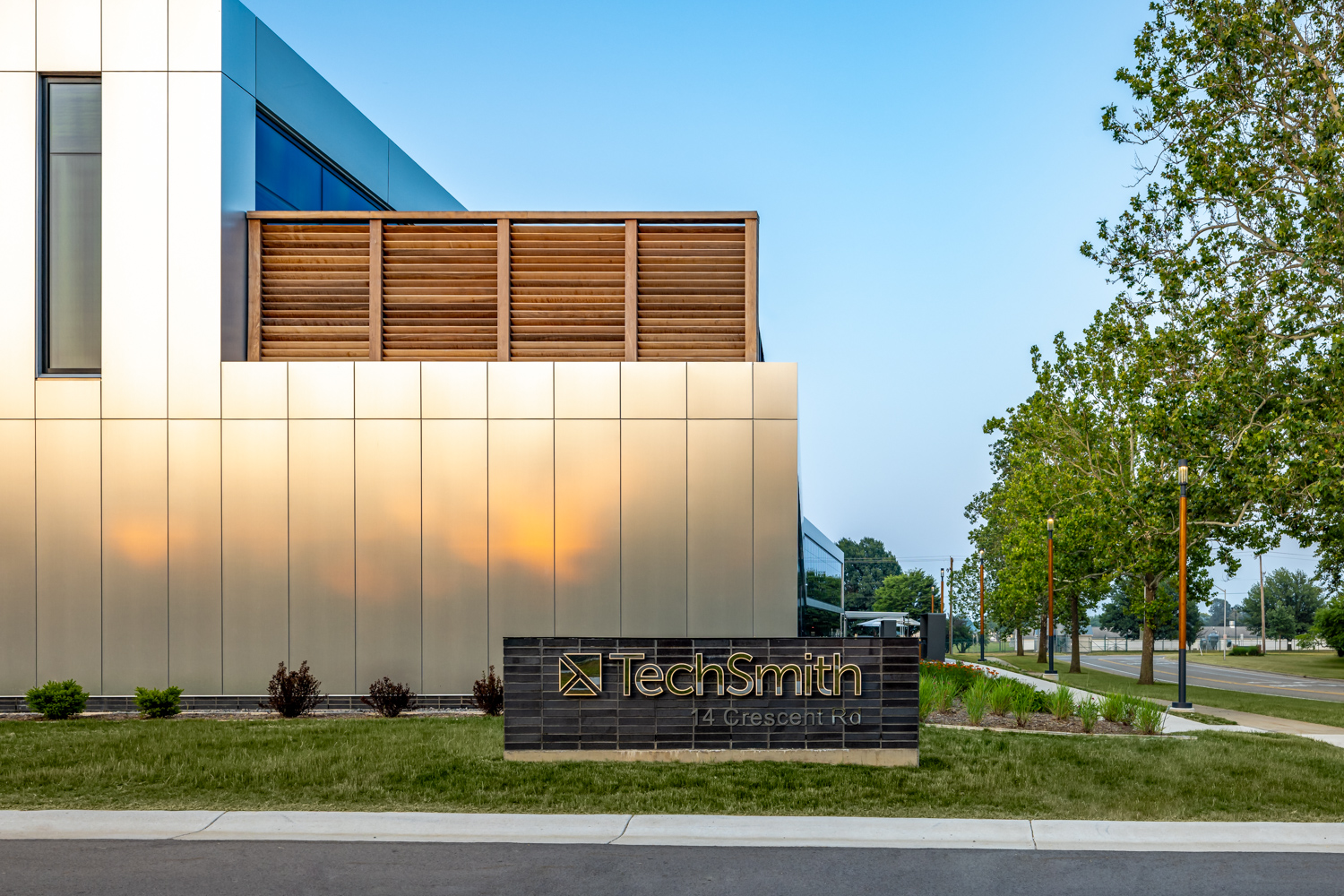
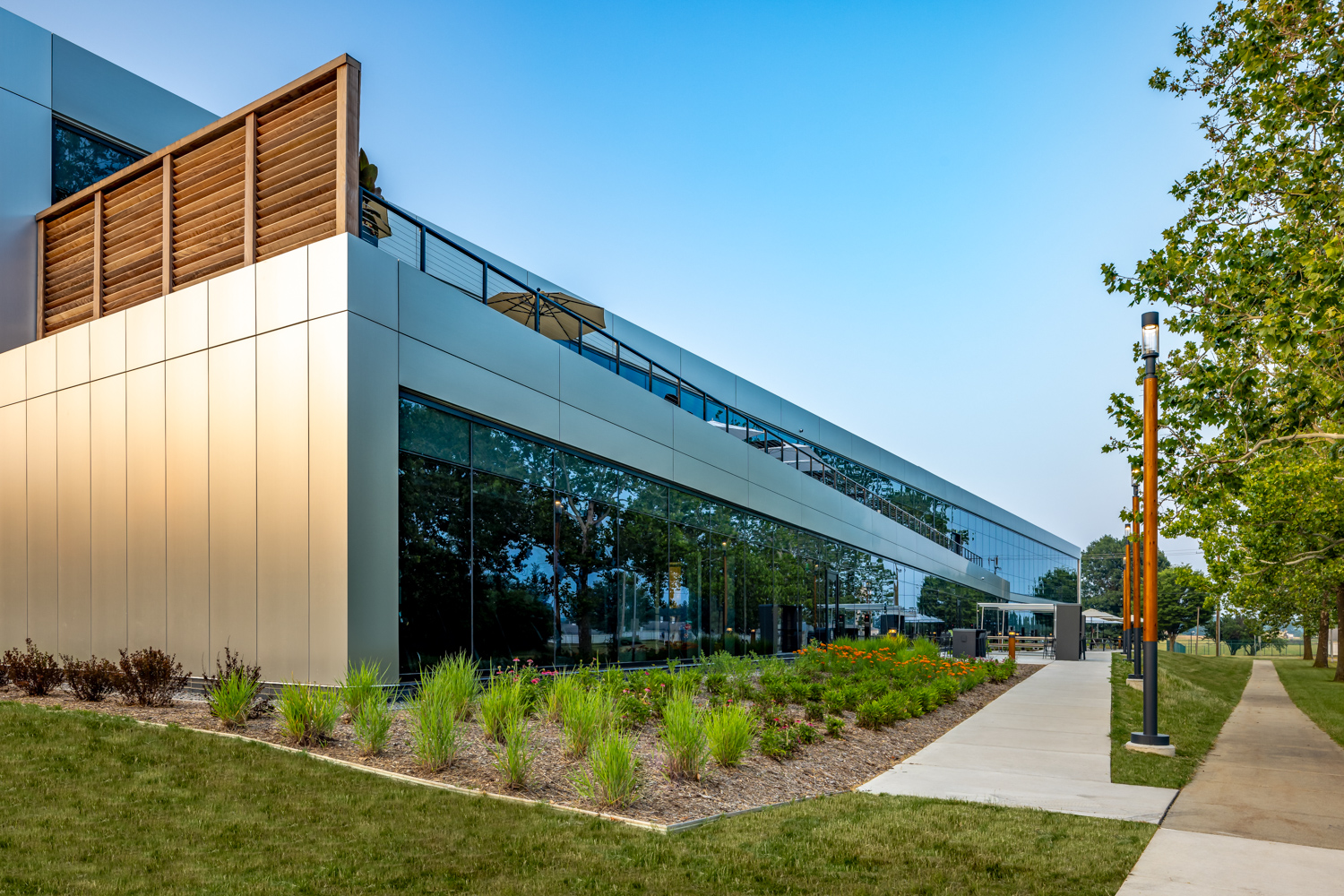
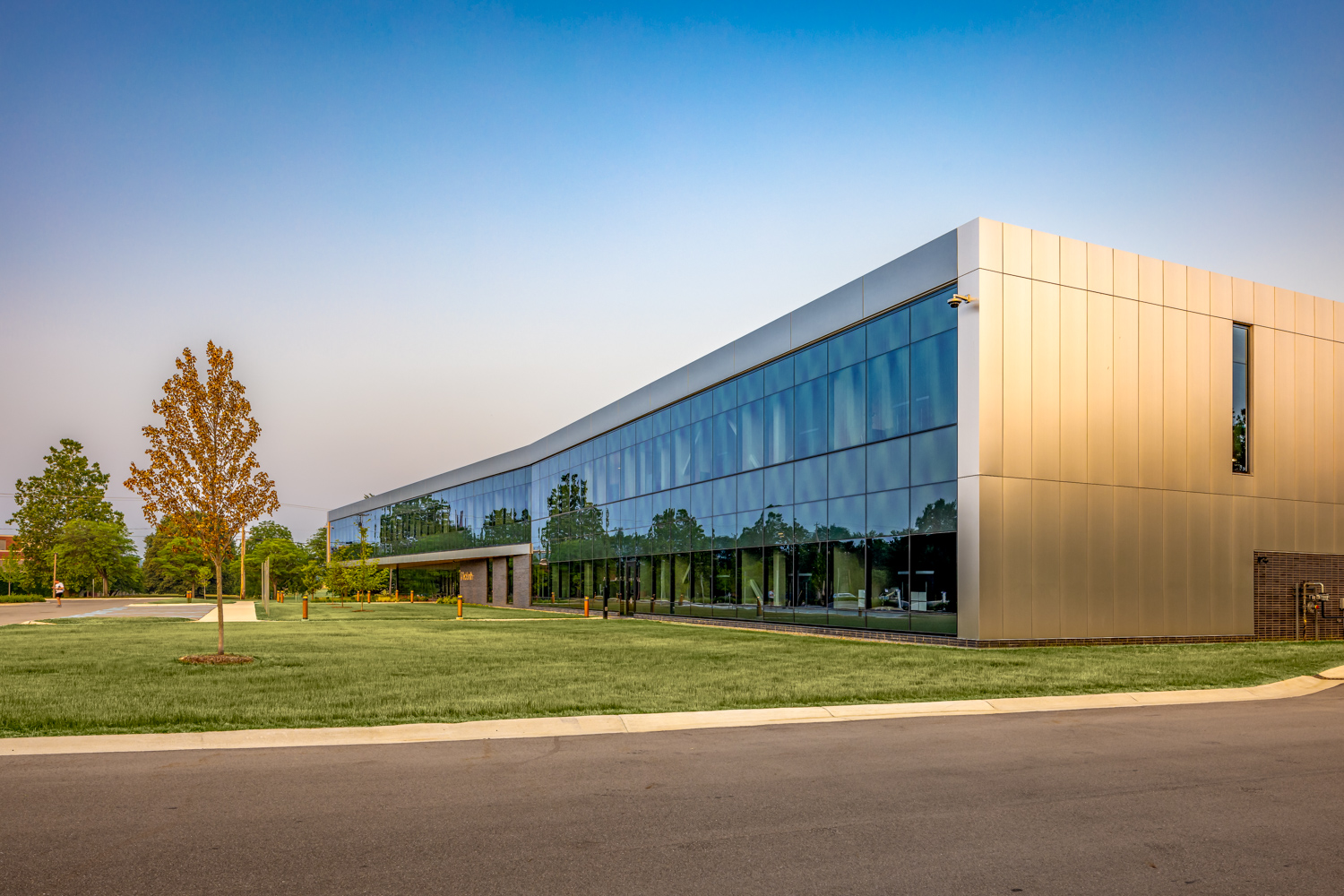
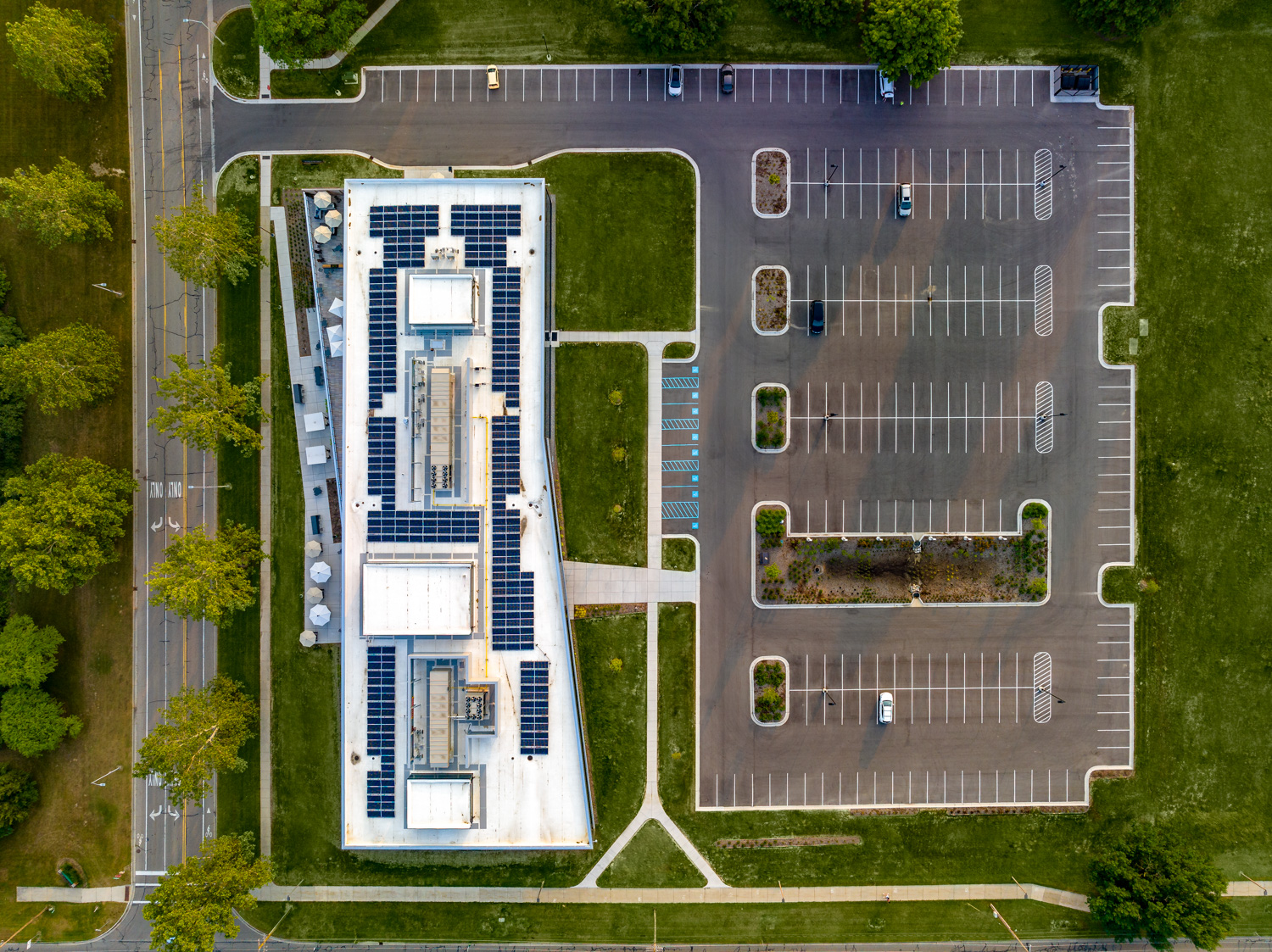
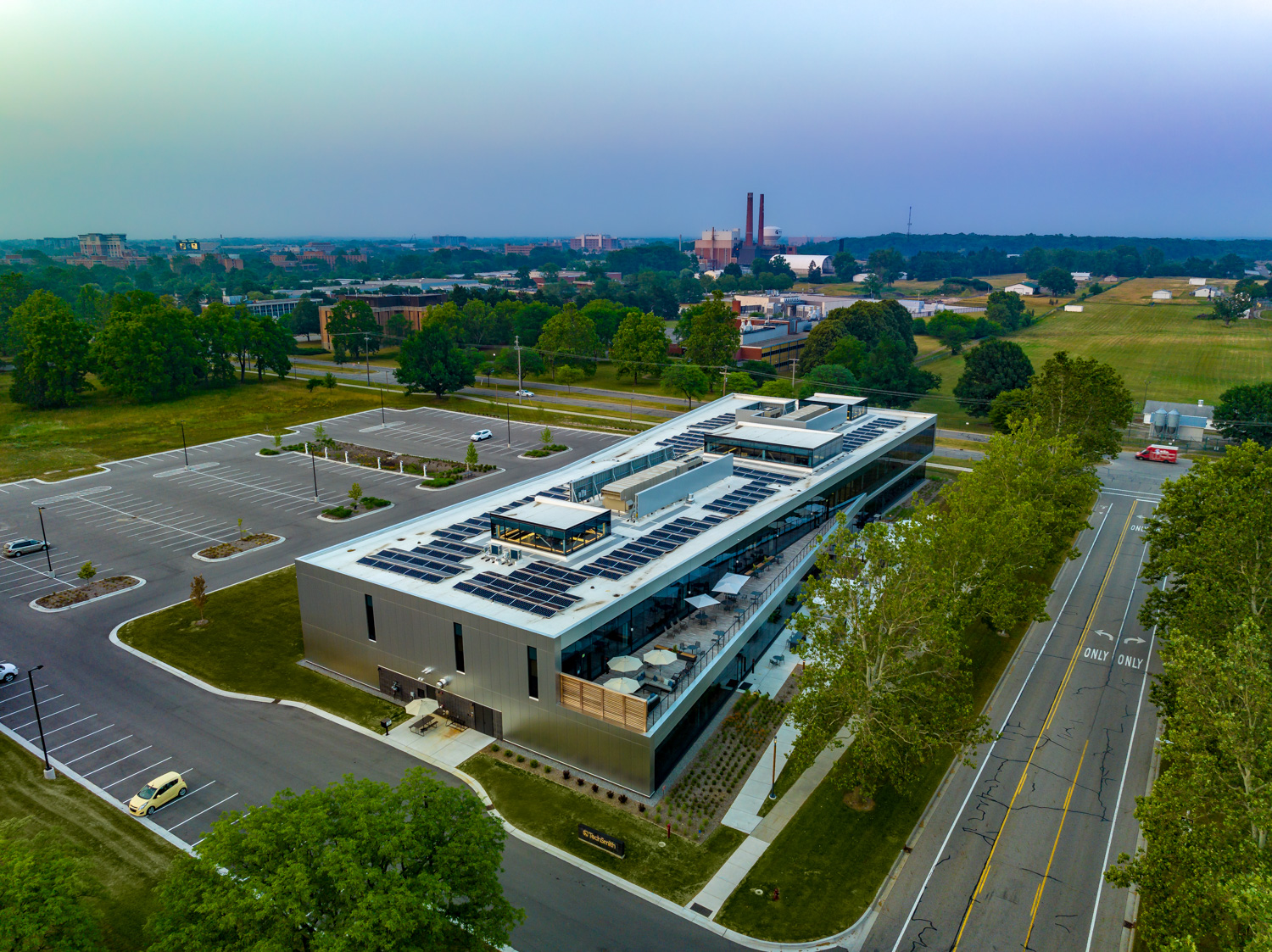
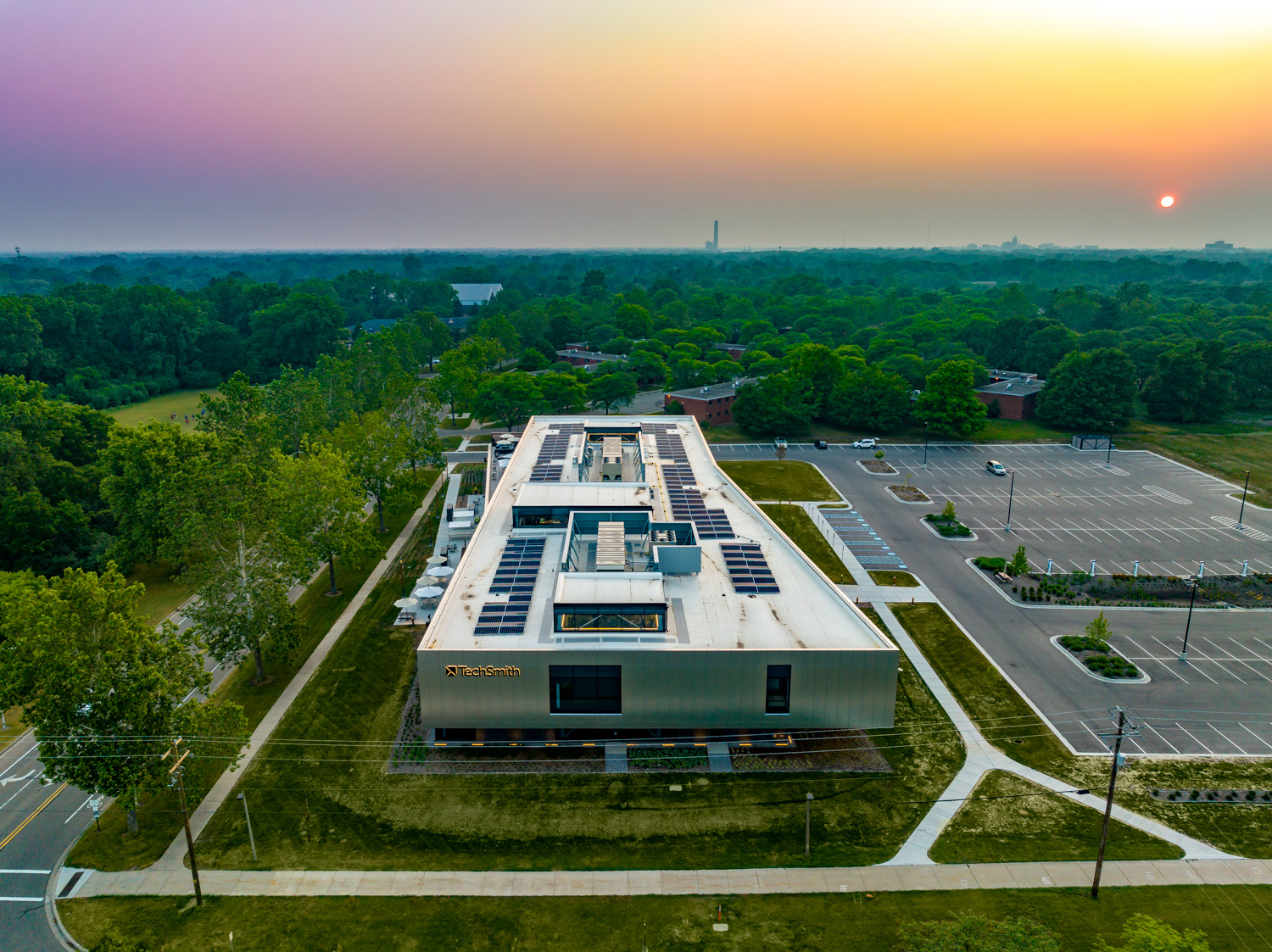
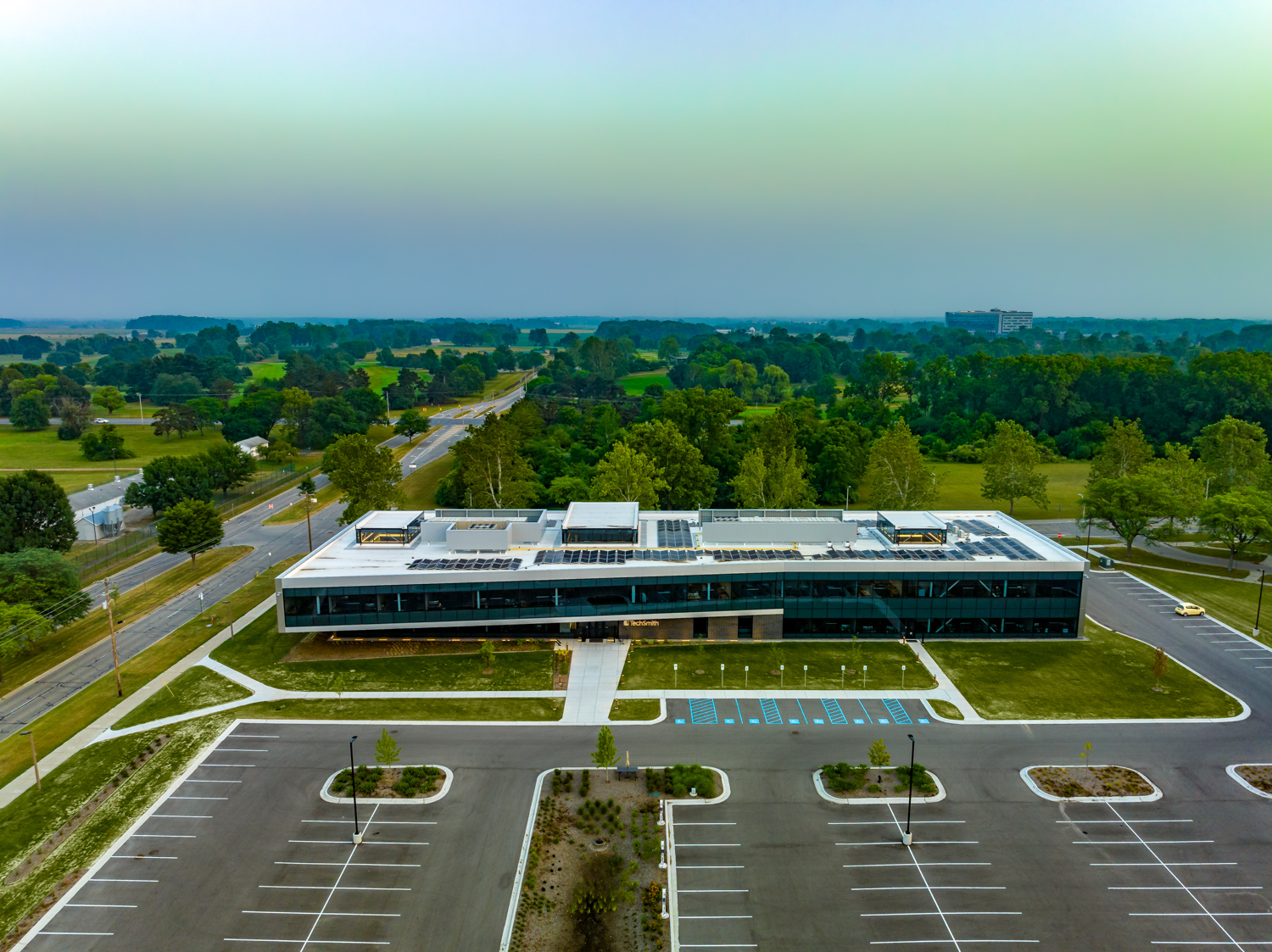
The summer imagery shifted the emphasis outward. Ground-level views documented the entrance, facade, completed landscape, and the building’s relationship to the site. Aerial photographs revealed the rooftop solar array and placed the headquarters within the university context.
Refinement and Summer Production
The winter interiors combined daylight, mixed interior lighting, reflective glass, and digital displays. Refinement brought those conditions into a consistent visual range while preserving the depth created by glazing, daylight, and layered interior spaces.
The summer session required flexibility around weather and air quality.
Aerial production also required a separate approval process because the preferred launch position was located on university-controlled property. 517 Visuals completed the required risk assessment and coordinated the flight window with Michigan State University planning and facilities staff. The approved launch position allowed the aerial photographs to show the rooftop solar array and the building’s site relationship clearly.

Licensing, Award Use, and Recognition
The MSU Research Foundation commission and any independent stakeholder use remained separately defined through written licensing.
SmithGroup later received separately defined usage rights for selected summer photographs used in its AIA Detroit award submission.
The aerial views were particularly useful to the submission because they showed the rooftop solar array and broader site context in ways that were not available from ground level.
The project received a 2024 AIA Detroit Architectural Award.
The engagement demonstrates how phased production can align occupied interiors, seasonal completion, aerial access, employee participation, stakeholder licensing, and award-oriented image use within one architectural record.
This project is part of 517 Visuals’ broader work documenting workplace architecture in Lansing, East Lansing, and across Mid-Michigan. For a closer look at how 517 Visuals plans architectural photography before production, read Architectural Visual Strategy and The Briefing Structure: Why Strategic Architectural Photography Is Defined Before Production.
Winter Gallery
The gallery below includes the 17 final interior and occupied workplace photographs created during the winter phase.
Summer Gallery
The gallery below includes the 20 final exterior, aerial, and selected interior photographs created after the landscape was complete.

For additional project examples, visit the selected architectural case studies or the broader architectural photography gallery.
Photography by 517 Visuals. Copyright remains with 517 Visuals. Usage rights are defined through written licensing.