Part 3: The Briefing Structure
Part 3: The Briefing Structure
Translating Project Priorities Into Photography Requirements Before Production
AEC teams often begin photography planning with a list of spaces, access requirements, and available dates. Those inputs are necessary, but they do not yet define what the final image set needs to accomplish.
Photography planning works better when the team has some clarity about what matters about the project and what the photography needs to preserve. What Matters About This Project? explores how to identify those priorities before planning begins.
A useful architectural photography brief takes the next step. It translates project priorities, architectural knowledge, and production conditions into decisions while there is still time to shape the work.
A Brief Is More Than a Shot List
Floor plans can identify rooms. Marked camera positions can identify preferred viewpoints. A schedule can establish access. A shot list can help ensure coverage.
A shot list identifies what to photograph. A brief explains what the photography needs to accomplish.
All of those tools are useful, but they do not automatically explain why one image matters more than another, what role different photographs need to play in the final set, whose project knowledge could affect the plan, or whether production conditions will prevent the project from being represented as intended.
Michigan Realtors Headquarters helped shape how we approach that distinction today. Planning included building plans, proposed camera positions, project information, and project-team review. Those materials gave us useful direction around where photography should occur, but the engagement revealed another question we needed to ask: what did each part of the final image set need to accomplish?
As production and proof review progressed, the answer became clearer. Exterior identity, aerial context, workplace and meeting environments, human use, and dusk conditions each played a different role in explaining the completed headquarters. The building ultimately required more visual range than the initial image count anticipated.
The experience showed us that we needed to ask better questions. Knowing where to photograph was not the same as understanding why the photographs mattered or what the completed library needed to communicate.
The briefing structure in this article grew in part from that experience.

What the Brief Needs to Resolve
A useful briefing process should resolve five things.
What Does the Photography Need to Accomplish?
What should the final image set help someone understand about the project?
Some of those priorities may already be clear before briefing begins. Others may become clearer as project knowledge enters the planning process.
What Visual Evidence Is Required?
What does someone need to see for the photography to support that understanding?
That may require particular spaces, relationships, systems, materials, contextual views, details, or forms of human use. The question is not only where photographs should be made, but what role each part of the image set needs to play.
Whose Knowledge Is Needed?
Marketing teams rarely hold every piece of information that could affect the photography. Project architects, engineers, designers, facilities staff, and other stakeholders may each understand something important about the finished work.
The photographer brings another kind of knowledge to the process: how those priorities might be made visible. The project team understands the work. The photographer helps determine how that understanding can be translated into photographs.
The people who know the project should contribute what they know. That does not mean everyone needs to direct the photography. The challenge is getting the right knowledge into the planning process without turning every contribution into a priority or every contributor into a decision-maker.
Too Many Voices, Not Enough Direction looks more closely at how to gather that knowledge without turning photography planning into a committee decision.
What Needs to Be Resolved Before Production?
What needs to be addressed around access, readiness, people, privacy, weather, season, lighting, staging, aerial feasibility, or other conditions that could affect the intended photography?
Some conditions simply need to be understood. Others require action before production. Once important project conditions are fixed, photography planning stops shaping possibilities and starts working within what remains.
What Does the Final Plan Include?
Which priorities should drive the work? What needs to be photographed? How should production be sequenced? Who needs to review the plan?
The final plan might include a shot list, drawings, proposed camera positions, timing, access requirements, staging notes, or other production information. Those tools become more useful once the decisions behind them are clear.
The point is not to create a rigid process. It is to surface consequential decisions before they become production problems.
What This Looks Like in Practice
When Hanbury commissioned photography of the renovated Student Services Center at Grand Valley State University, the assignment included a compressed production schedule and an award-related need.
A week before production, we walked the project and translated that review into a visual plan. The process identified proposed camera positions, image priorities, alternate views, staging considerations, and detail opportunities. It also surfaced temporary signage, a construction lift, unfinished glass treatments, missing planters, and spaces that needed preparation before photography.
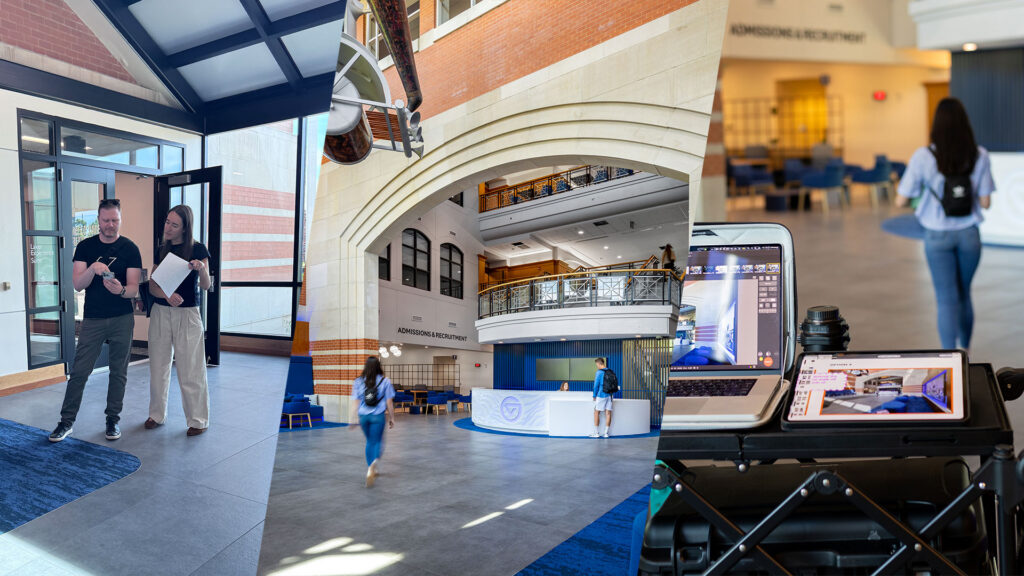
The value was not the document itself. It was that decisions were made while they could still influence the outcome.
The team could prepare the building, priority spaces could receive the appropriate production time, and the final sequence could be planned around what the renovated environment needed to communicate rather than whatever happened to be easiest to photograph on arrival.

The decisions that need to be resolved change with the project.
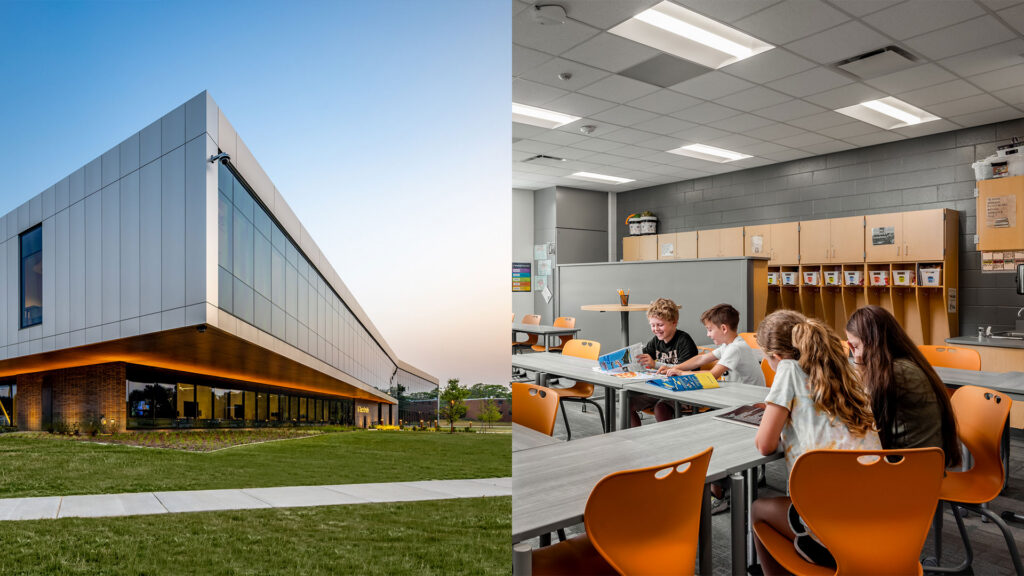
At Tri County Elementary, student use was part of what the photography needed to communicate. Because production took place the week before the school opened, student participation had to be planned in advance rather than left to whatever activity happened to be available on production day.
At TechSmith Headquarters, planning extended beyond a single production date. Exterior and landscape photography was completed later, when seasonal conditions better represented the finished project.
The process changes because the project changes. The purpose remains the same: identify consequential decisions early enough that they can still shape the work.
A Better Brief Should Clarify, Not Complicate
Not every project needs an extensive visual plan. Not every stakeholder needs to participate. Not every possible future application belongs in the scope.
For a focused project, the briefing may take a short conversation. For a complex institutional engagement, it may require drawings, a walkthrough, targeted project-team input, and a more developed production plan.
The amount of structure should be proportional to the assignment. A useful brief does not make the project more complicated. It prevents important decisions from being made accidentally on production day.
The next question is whether that plan will produce an appropriately complete project record. That is the focus of the next article in this series, A Pretty Gallery Can Still Be an Incomplete Project Record.
Continue to A Pretty Gallery Can Still Be an Incomplete Project Record →
This article is part of the AEC Visual Strategy series, which examines how photography can be planned, produced, and managed as part of an AEC firm’s larger visual strategy.
Would you like keep up with our latest work?
Follow our happenings by subscribing to our social media accounts
connect with us
